Factories, workshops, yards and industrial units

Industrial Security Perth

Industrial security Perth businesses ask us for is usually one of four jobs: cameras across a yard and gate so vehicles, stock and plant are recorded, a monitored alarm zoned for roller doors, the factory floor and the front office, access control on the workshop and the stores so keys stop circulating, and an upgrade of an older panel or recorder that the site has outgrown. We design, install and maintain all four on factories, workshops, truck yards and industrial units across the Perth metro area.

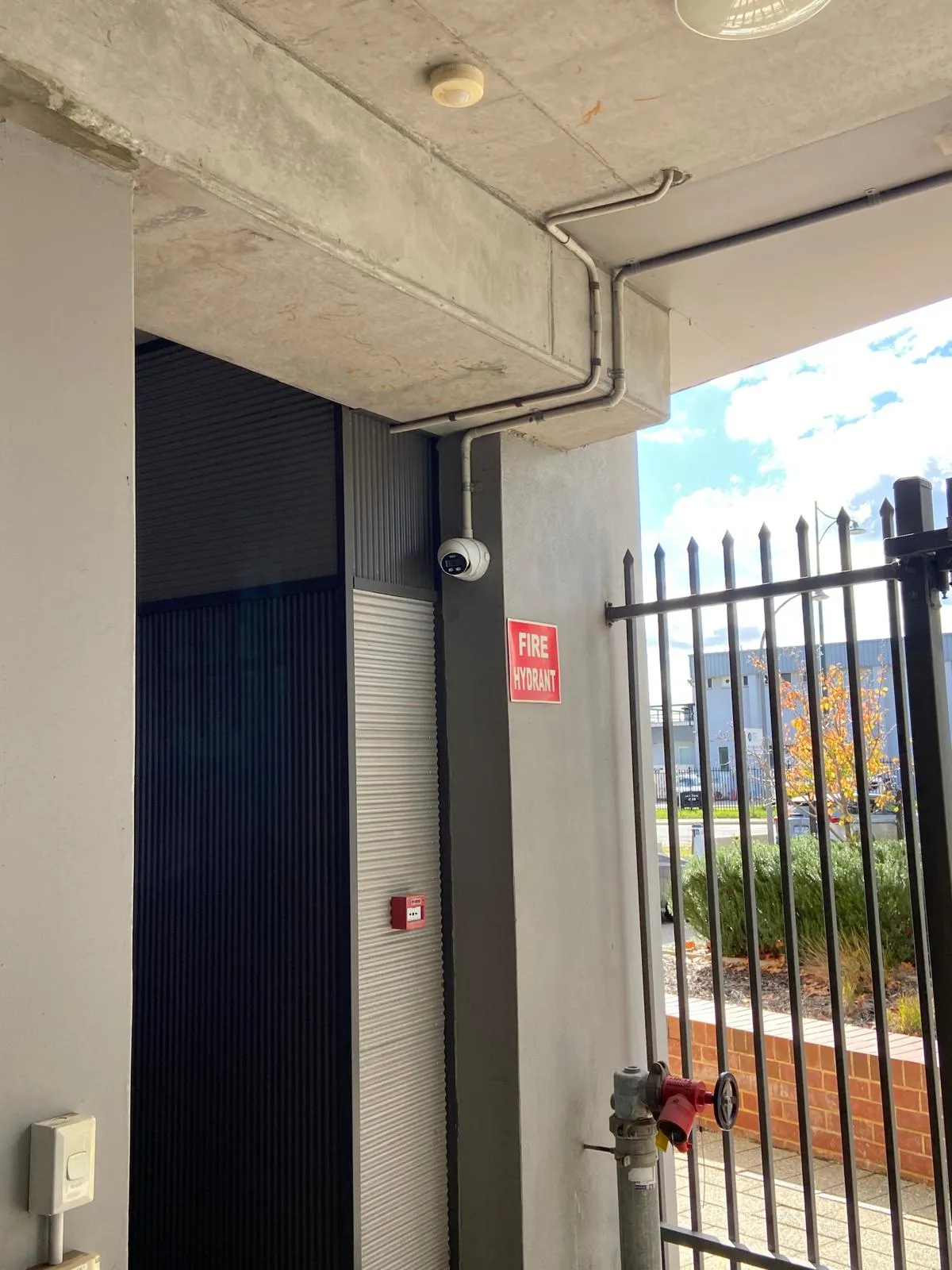
Industrial security Perth: dome camera under the awning of an industrial unit covering the palisade gate and driveway

Cameras on the yard, the gate and the switchboard

Industrial sites lose things outside before they lose them inside: fuel, tools from utes, copper, batteries, trailers and whatever sits on the hardstand overnight. The camera layout starts at the gate, with a position that reads plates and faces on the way in, then works around the yard so parked trucks, stock and plant are covered from more than one angle. A mechanical workshop in Perth's south-east came to us wanting exactly that for a truck storage yard: the brief was that nobody gets in, takes anything or interferes with customers' vehicles, and the design was a camera plan over the yard layout with the positions marked before anything was quoted.

Outdoor cameras on industrial sites are chosen for the position, not the catalogue: long-range models for the fence line, wide low-light models for the yard, and vandal-resistant housings where forklifts and trailers pass close by. Where a camera has to sit on the switchboard wall or a steel column, we run conduit rather than loose cable, and where the yard has no building to mount to, poles are specified for the site. For boundary detection and gate access across larger compounds, our perimeter security page covers fence-line analytics, beams and gate control in detail.
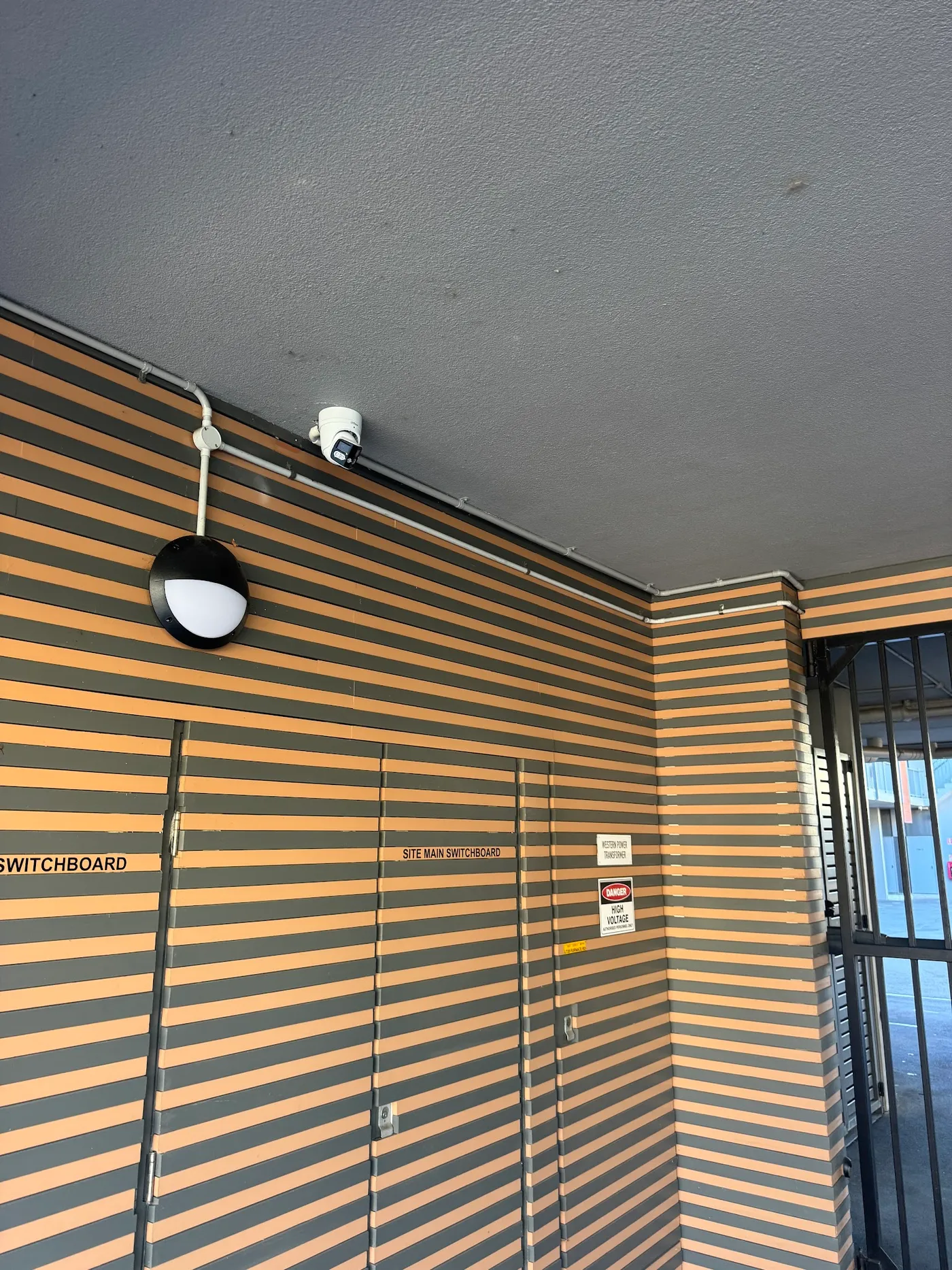
Dome camera mounted on the cladded wall above the site main switchboard of an industrial building

An alarm zoned for roller doors, the floor and the office

A factory alarm is zoned differently from an office alarm. Roller doors get their own contacts so a door left open after close reports as that door, long-range detectors cover the production floor and racking aisles, and the office, server cupboard and any cash or tool store sit on separate zones so the monitoring centre knows which part of the building has tripped. One workshop owner we quoted had specified it herself: reed switches on three stainless screen doors, one on the main roller door and three motion detectors inside, which is a sound starting design for a workshop with a reception at the front.

  • Roller doors and personnel doors: contacts on every door, with the roller doors reporting individually.
  • Floor and racking: long-range or curtain detectors sized to the span, mounted clear of forklift paths.
  • Office and stores: separate zones for the front office, tool store and anywhere cash or small high-value stock is kept.
  • Open and close reporting: the owner sees who armed the system and when, which answers the "was it even set" question after an incident.

Monitoring runs through our commercial alarm monitoring accounts, with response instructions written per zone. Sites with a 3G communicator that no longer reports are moved to a current 4G or dual-path unit as part of the same job.

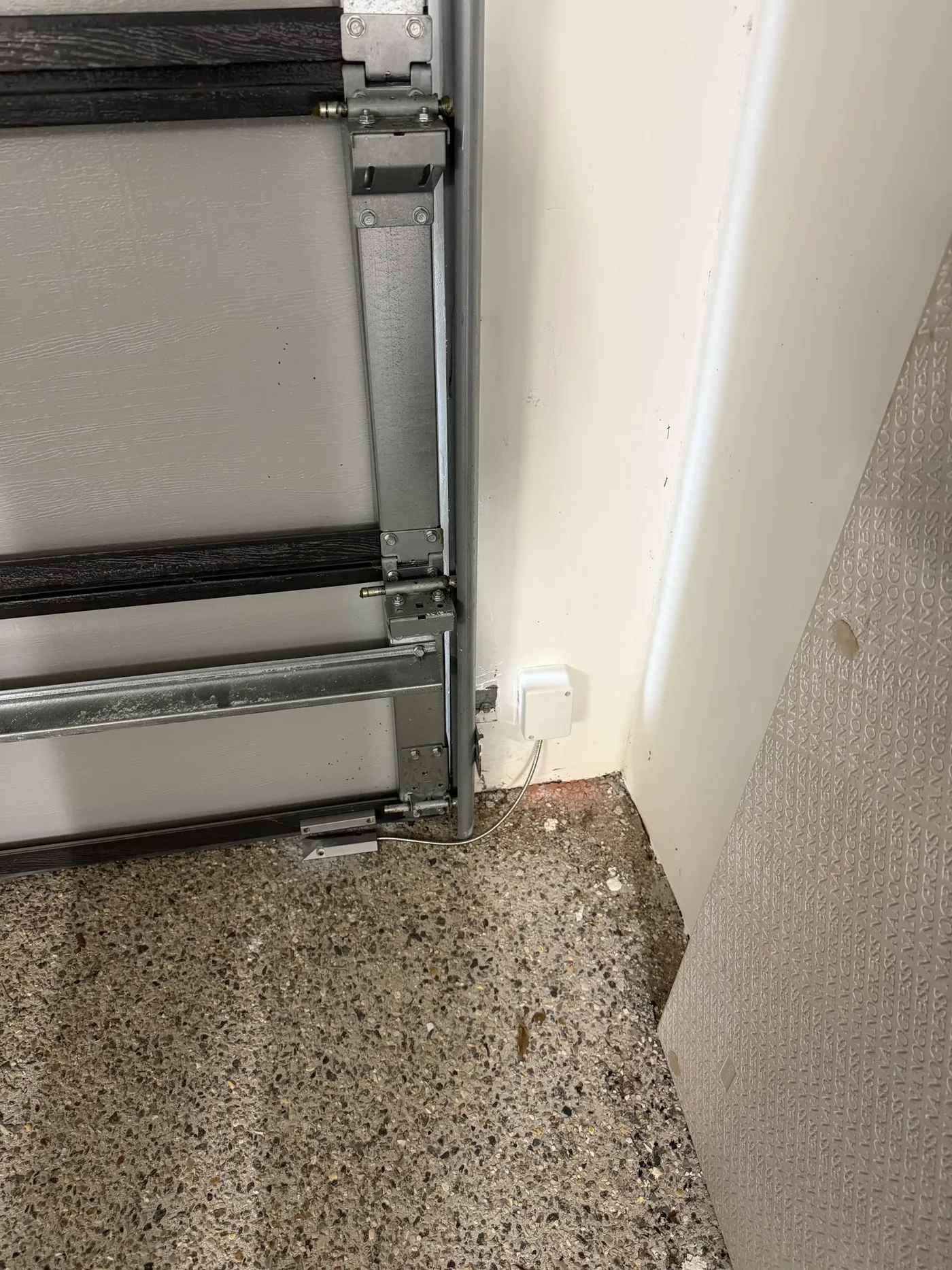
Reed switch contact fitted at the base of a roller door, cabled back to the alarm panel

Inside: racking, stores and the production floor

Inside the building the cameras go where stock and plant change hands: the dispatch door, the racking aisles that hold the lines worth stealing, the tool store and the production floor itself. A factory that already ran seven cameras asked us to replace them alongside new front-door access control and gate intercom handsets, and the useful part of that brief was the order of priorities: see the dispatch door first, the floor second, the car park third. Camera height matters more in a warehouse than anywhere else; too high and faces are lost under caps and hi-vis, too low and the forklift takes it off the wall, so positions are set on site rather than from a plan.

Recorders are sized for the retention the owner wants, with thirty days the usual starting point and longer for sites with incident history. Camera placement inside staff areas follows the Surveillance Devices Act 1998, so lunch rooms and change rooms stay uncovered and entry signage is quoted with the install. Where WA Police's camera register applies to the site, our Cam-Map registration page explains how the system is listed.

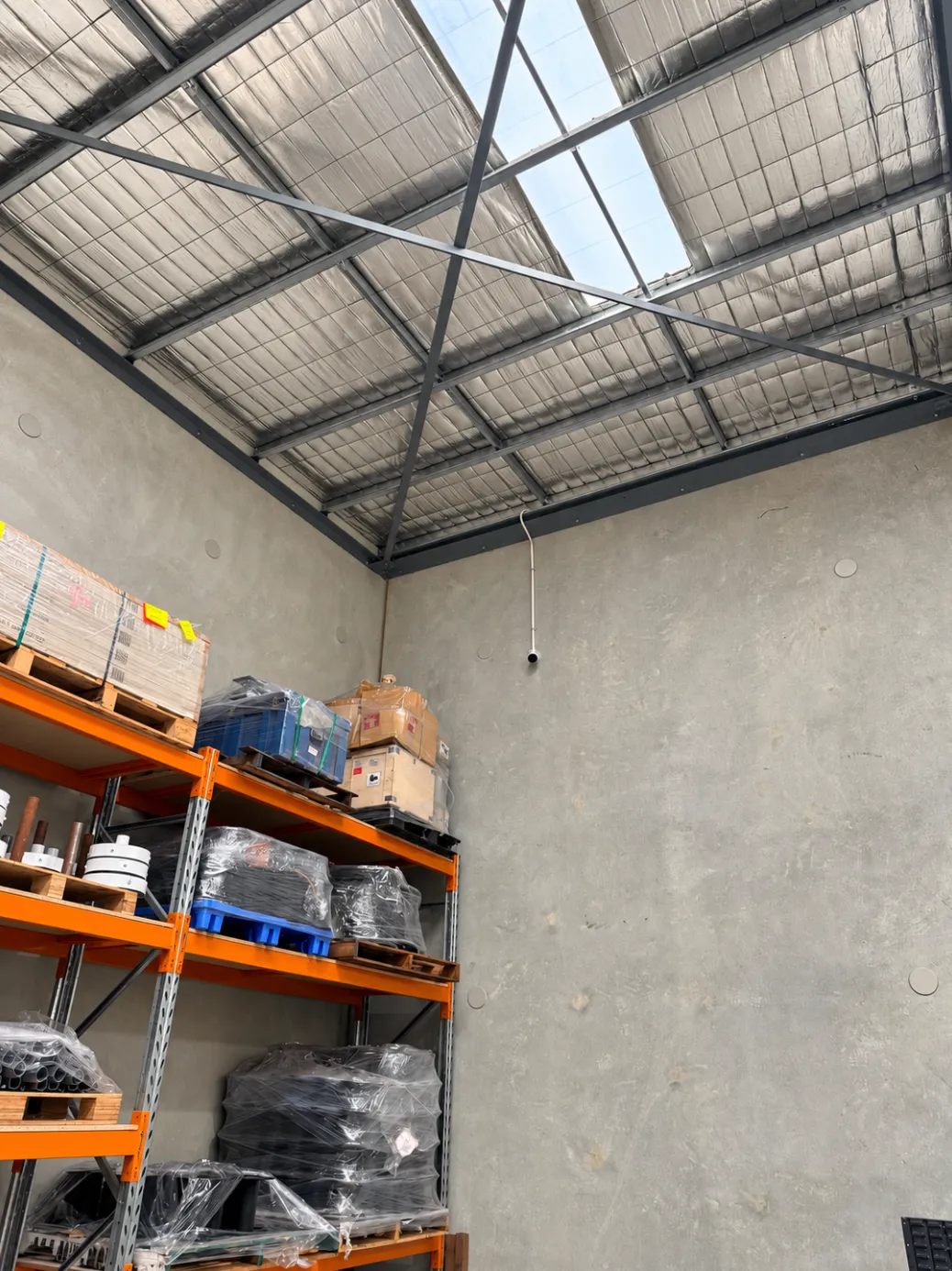
Camera mounted high on the concrete panel wall of a warehouse above pallet racking

Access control for the workshop, the stores and the front door

Keys are the usual weak point on an industrial site. A warehouse-office in Perth's north called us the morning after their workshop roller door was found open late at night; the door was the symptom, but what they wanted fixed was a front entry still on a mechanical key that half the staff had copies of. The answer was key fob access control on the front door and the door between reception and the workshop, so a leaver's fob is cancelled rather than the locks changed, and the system records who opened which door and when.

Workshops and stores holding tools, chemicals or finished goods are the next doors to control, followed by the gate for sites where contractors and drivers arrive before the office opens. A factory in Welshpool running Inner Range with keyring tags is a typical set-up; replacing a lost tag and cancelling the old one is a ten-minute job on that platform. Sites with a gate intercom add it to the same system so a driver at the gate rings the office and the office releases the gate from a phone or handset; our Inception installer page covers the single-controller platform that suits most single-site industrial businesses.

Upgrading a site that already has a system

Most industrial security work in Perth is an upgrade rather than a blank-slate install. An industrial firm in Malaga asked us to replace an older panel with a Bosch Solution 6000, keep the existing detectors, add keypads and bring the site into line with the company's other branches around the country. A leased factory in Jandakot needed its alarm working for the incoming tenant and nothing more. Each of those is scoped as the part that is wrong, with what stays tested and reused where it is sound. Our Bosch alarm installer page covers the Solution range for sites standardising on it.

Where a head office, an insurer or a client specification sets the camera requirement, we build to it. Utility and government compounds have asked for NDAA-listed cameras and AS 4806 coverage with a cyber review of the recorder, which our NDAA compliant CCTV page covers. After the install, login details and an app walk-through are part of handover, and the system can be placed on a commercial maintenance agreement if the owner wants scheduled checks of detectors, batteries and recorders. Our manufacturing security and warehouse security industry pages describe the loss patterns in each type of building; this page is about the systems themselves.

Questions we get asked

What does an industrial security system in Perth include?

Cameras across the yard, gate and inside the building, a monitored alarm zoned for roller doors, the floor and the office, access control on the front door, workshop and stores, and where the site has a boundary to protect, perimeter detection and gate control. Each part is scoped to the site, so a single-unit workshop and a truck yard with a fence line end up with different designs.

Can you secure an open yard with no building to mount cameras on?

Yes. Yards without wall positions are covered from poles sized for the camera and the wind load, cabled back to the recorder or linked by point-to-point wireless where trenching is not practical. Lighting, plate capture at the gate and camera count are set by walking the yard, so send a site plan or aerial image with the fence line marked.

Can you replace our old alarm panel and keep the existing sensors?

Usually. Existing detectors and door contacts are tested and kept where they are sound and compatible with the new panel, which is how a recent Malaga job moved to a Bosch Solution 6000 with new keypads. Old 3G communicators are replaced with a current 4G or dual-path unit at the same time.

Do you install access control on roller doors and workshop doors?

Yes. Personnel doors into workshops and stores take readers with electric strikes or maglocks, and roller doors are either interlocked to the alarm so they cannot be left open after arming, or put on a reader-controlled operator where the site wants a record of who opened them. Gate operators are added to the same system.

Can you work around production hours?

Yes. Cabling and mounting are done around shifts, with the changeover of panels, recorders and readers scheduled for a window the site nominates so production and dispatch keep running. Sites with hot works permits, inductions or forklift exclusion zones tell us the rules and we work within them.

What does industrial security cost in Perth?

The main variables are camera count and how many outdoor or pole positions there are, cable distances across the yard, the number of controlled doors and gates, whether the alarm is new or a takeover of an existing panel, monitoring, and whether the work is staged around production. Send photos or a site plan and we will quote from the actual layout.

Send us the site plan or the photos

A site plan or aerial image with the gate and fence line marked, photos of the yard, roller doors, front entry and where the recorder and panel live, plus whether an alarm or cameras exist today. We will come back with a quote for each part of the system, or arrange a site walk if the yard needs one.