Fence-line CCTV, outdoor detection, controlled gates and camera-verified monitoring for commercial sites across Perth and WA. Designed to catch people and vehicles at the boundary, before they reach the building.
The perimeter enquiries we take in Perth follow a pattern. A site manager wants four to six cameras around the boundary watching the gates and the roads in and out, recording on a rolling basis so there is footage when a truck, a trailer or a pallet of stock goes missing. A warehouse tenant moving into a new building wants the external yard covered as well as the racking, with access control at the gate and monitoring after hours. A builder has poles already standing on a construction site and wants cameras on them before the next fit-out stage. A yard storing dangerous goods and parking semi-trailers needs the whole compound watched, not just the shed.
Every one of those sites has the same underlying problem: the fence is the first thing an intruder touches and the last thing most security systems look at. An internal alarm reports a break-in after the roller door is up. A camera on the building records a person who is already at the wall. Perimeter security moves the detection point to the boundary, where a response can still change the outcome.
It is also where the integrator-grade work is. Sites with multiple gates, long boundaries, contractor traffic and existing Gallagher or Inner Range platforms need the perimeter designed into the system they already run, not bolted on beside it.
Not every site needs every layer. The design starts with what you are protecting, where the boundary is exposed and what response is available, then adds only the layers that change the outcome.
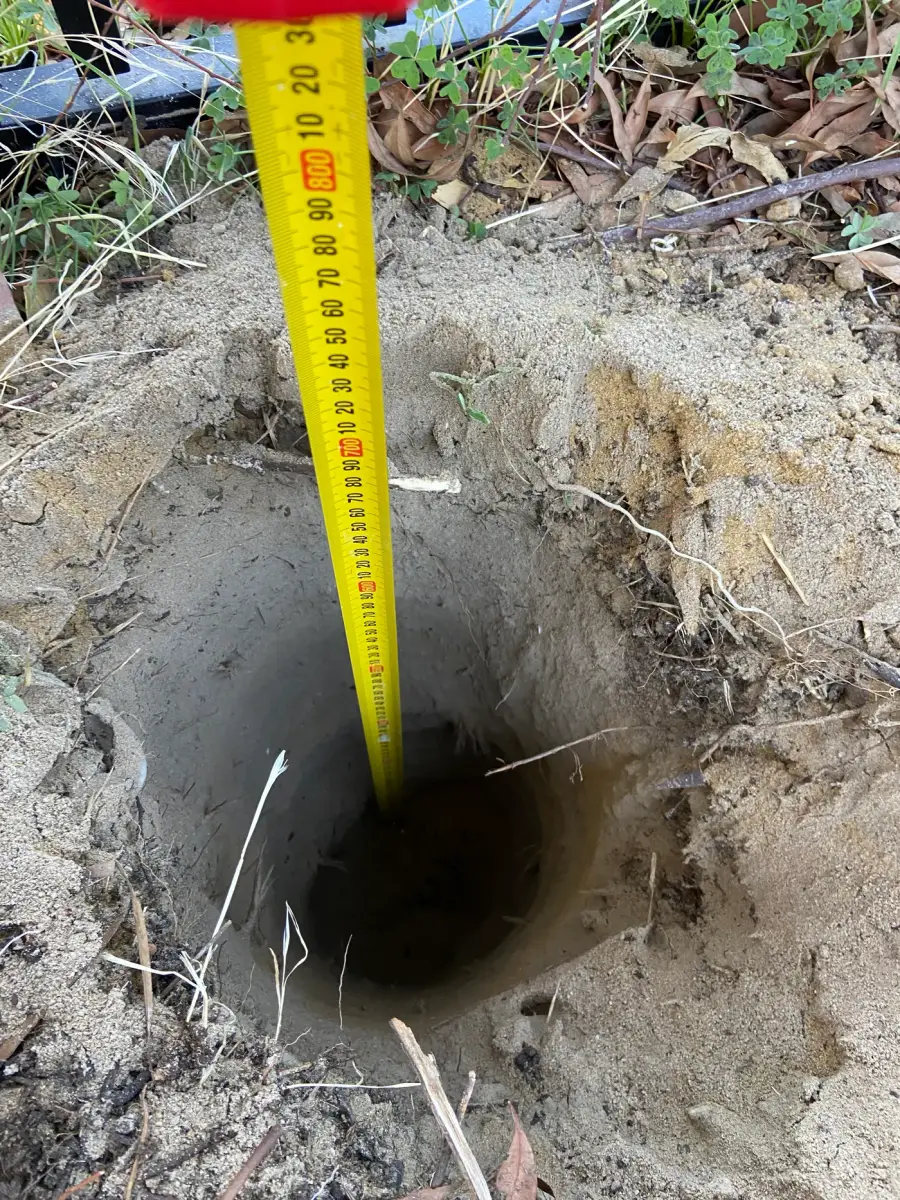
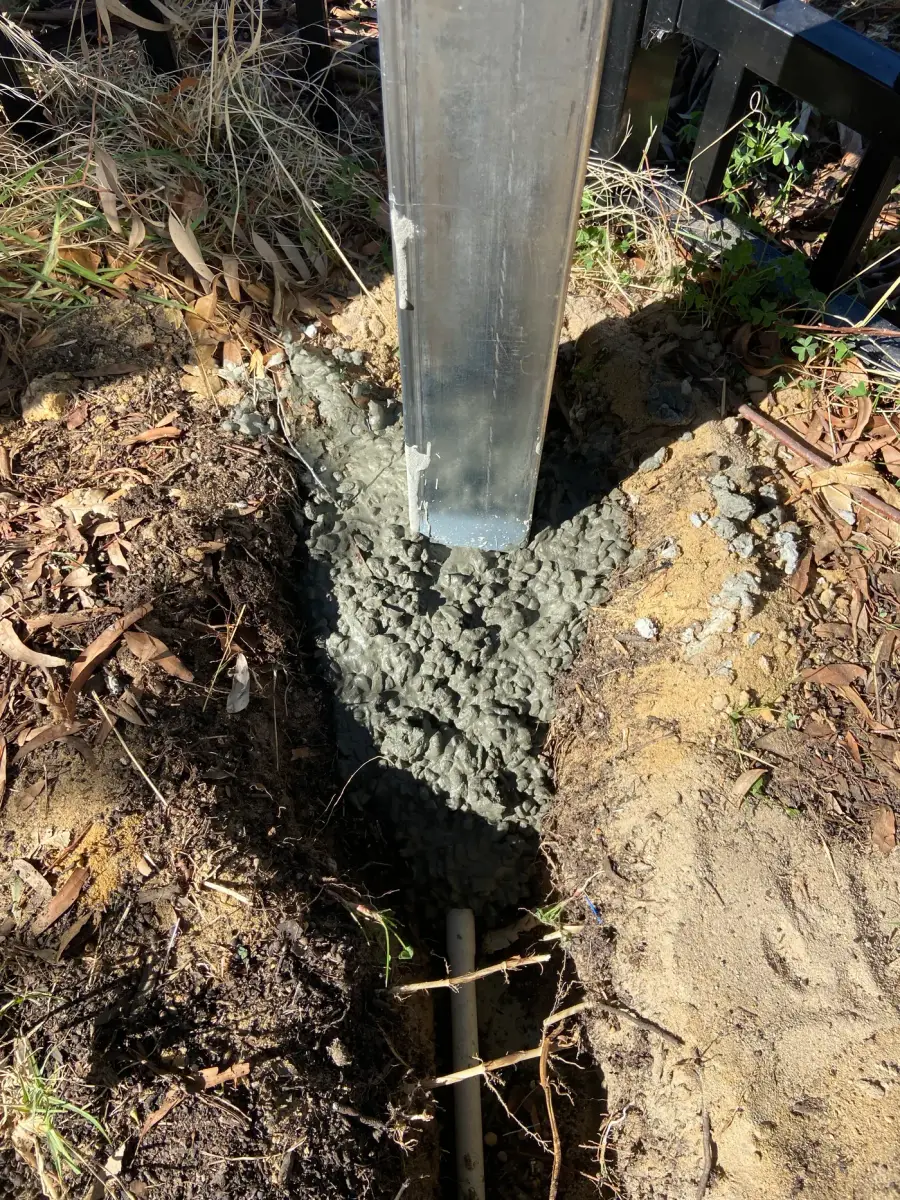
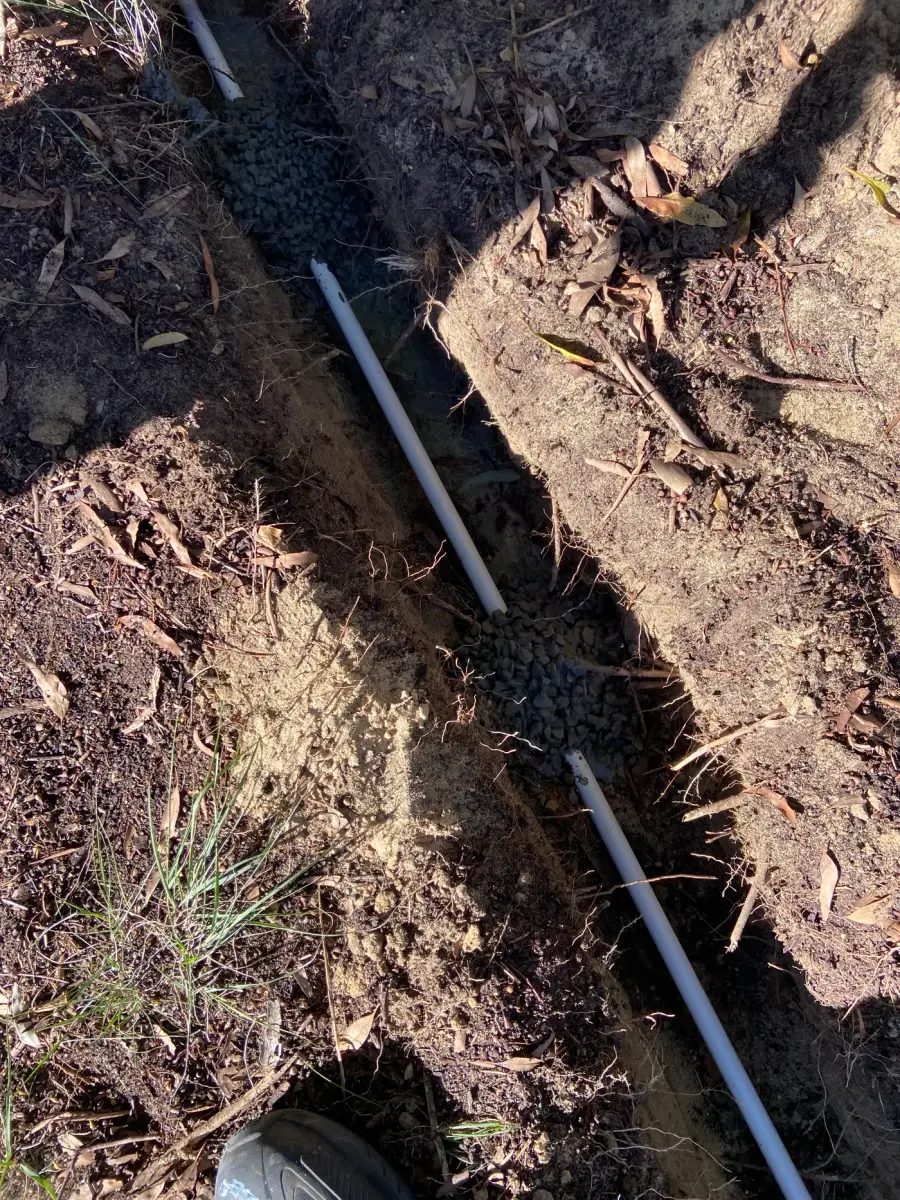
Cameras on a building have a wall to sit on and a ceiling to run cable through. Cameras on a boundary have neither. On a recent pole-mounted camera install the sequence was auger the footing, set the pole in concrete, trench conduit back to the building and pull the cable, all before a camera came out of the box. That civil work decides whether the system is still standing straight and dry in five years.
The same applies to power. Long boundaries rarely have a power point where the camera needs to be, so each position gets a decision: trench it, link it wirelessly from a powered pole, or use a self-powered unit if the position is temporary. Getting that decision wrong is how sites end up with cameras that were never connected.
A regional council recently asked for a handful of cameras around the perimeter of a facility shed with a set-and-forget rolling recorder. That is a perfectly good brief. Half of perimeter security is knowing when the simple version is the right one, and when the site has enough gates, contractors and stock exposure to justify detection, access control and monitoring on top.
External stock, trailers and plant in the yard, with gate access and after-hours detection.
Vehicle gates, plate capture and boundary cameras for fleets that move around the clock.
Boundary cameras on existing poles or towers, staged as the site changes.
Laydown areas, compounds, valve stations and remote assets with long, dark boundaries.
Outdoor stock, gas storage and vehicle compounds secured from the boundary inward.
Works depots, waste facilities and community sites with plant and vehicles left outside.
After-hours boundary detection and grounds cameras across multiple buildings.
Common grounds, car parks and vehicle gates managed for a committee.
Entry and exit capture, boom gates and coverage of every bay from the boundary.
Sites often stage it: perimeter first, internal cameras and access control in a later phase once the site is occupied. That is a sensible order. The boundary is where losses start, and the head end installed for the perimeter carries the internal layers when they come.
Hikvision, Dahua, Uniview, Axis, Hanwha, Avigilon and Ubiquiti UniFi Protect, with human and vehicle classification and thermal options where the boundary calls for them.
Optex beams and outdoor detectors, Ajax outdoor detectors and sirens, and curtain detection integrated into Bosch, Inner Range, Tecom and Ajax alarm platforms.
Gallagher, Inner Range Integriti and Inception, HID readers and credentials, UniFi Access, with boom gate, bollard and plate-recognition interfaces.
Camera-verified alarm reporting to a monitoring centre, or app notifications with video clips for sites that manage their own response.
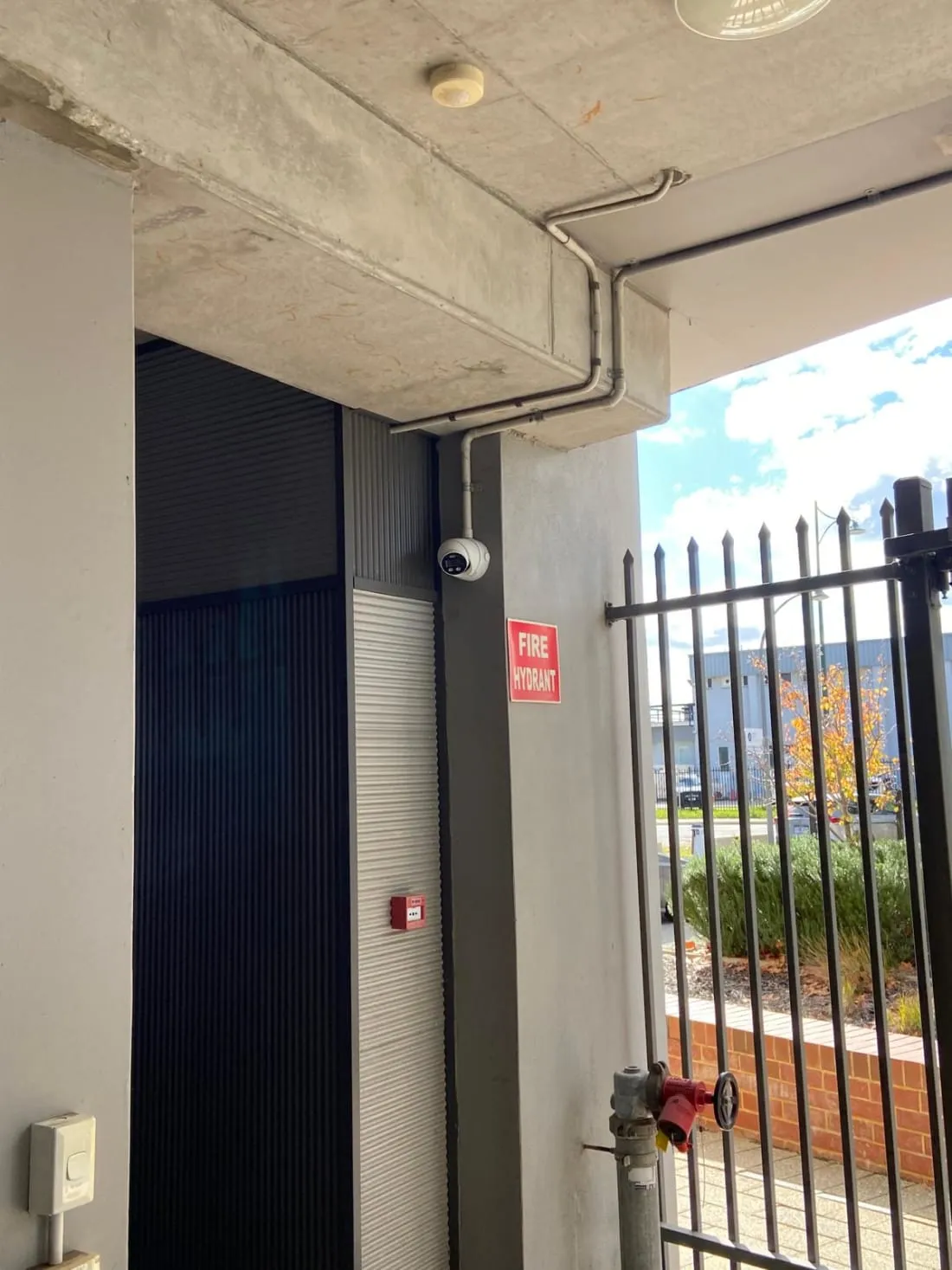
A perimeter alarm is one layer: outdoor detectors or beams that trip an alarm when someone crosses a line. Perimeter security is the whole boundary designed as a system: fence-line cameras that classify people and vehicles, outdoor detection at the high-risk segments, controlled vehicle and pedestrian gates, lighting and audio deterrents, and a monitoring path so a detection turns into a response. Most commercial sites need the combination, not one layer on its own.
Usually not. The majority of perimeter systems we design go onto existing chain-mesh, palisade or Colorbond fencing and existing gates. Fence-mounted detection is only worth it on high-value segments such as magazine compounds or fuel farms; for most yards and depots, pole-mounted cameras with analytics and beams at the vulnerable corners do the job without touching the fence.
By deciding up front what should trigger and what should be ignored, then testing in real site conditions. Camera analytics are set to classify humans and vehicles rather than any movement, detection zones are drawn to exclude public footpaths and roads, beams are mounted and aligned to ignore ground-level animals, and vegetation that will grow into a beam path is dealt with at install. Every zone is walk-tested at night before the system is handed over.
Yes. Perimeter events can report to a monitoring centre the same way an internal alarm does, with camera verification so the operator sees what tripped the zone before deciding on a response. Sites that prefer to self-manage get push notifications with a video clip to nominated phones instead of, or as well as, monitoring.
Long boundaries rarely have power where the cameras need to be. The options are trenched power and data back to the building, wireless links from a powered pole to the head end, or self-powered camera units for remote or temporary positions. Which one suits depends on the run length, ground conditions and whether the position is permanent. We scope this on site rather than assuming.
In most cases, yes. Outdoor detectors and beams connect to existing alarm and access platforms as additional inputs, and cameras with analytics can be added to an existing recorder or video management system where it supports them. We check the existing head end before quoting so you are not paying for a second system that duplicates the first.
Tell us the site address, what sits outside after hours, how many gates you run and what is already installed. We will walk the boundary with you and come back with a perimeter design and a staged quote.