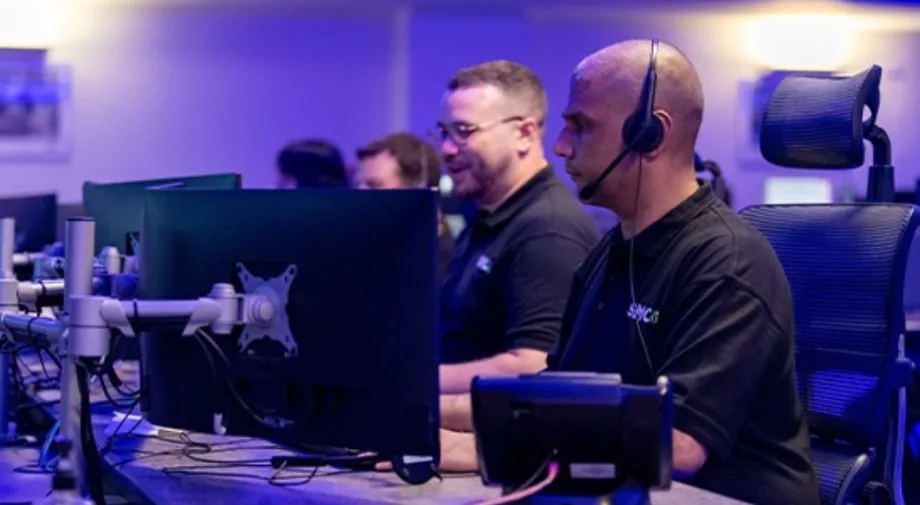
Back-to-base monitoring for businesses, facilities and multi-site portfolios across Perth and WA, through a Grade A1 monitoring centre. Intrusion, duress, open/close reporting and camera verification, on the alarm panel you already have or one we install.
Commercial monitoring enquiries in Perth rarely start with "we want an alarm monitored". They start with a requirement. A dangerous-goods freight forwarder has to hold accreditation that calls for access control, cameras across the warehouse and the external yard, and 24/7 monitoring, and wants one proposal covering all three. A facility with bonded-store-style obligations needs 24-hour monitoring, controlled access and a way to get security on site if there is an intruder. A regional council goes to market for a contractor to monitor and service its alarms. A business fitting out a reception wants panic buttons at the counter, codes for after-hours arming, and to understand exactly what happens at the monitoring centre when a button is pressed.
The other common call is a changeover. A business already monitored by someone else that wants a second contractor for servicing because the incumbent's call-out rates are too high. An operator with sites in two states that needs the monitoring contact lists sorted properly. A client whose alarm activated while they were away and found nobody at the monitoring company could be reached. A site whose keyholder details at the monitoring station had been wrong for days before anyone noticed.
Every one of those is a monitoring problem before it is a hardware problem. This page covers how we set commercial monitoring up so the signal path, the contact list and the response plan are right, and what a takeover of an existing panel involves.
The alarm panel on your wall reports events to a staffed control room. Operators act on each event according to a plan written for your site. On a business account that plan covers more than a break-in.
Reception desks, pharmacy counters, medical practices, licensed venues, council front counters and any workplace with staff facing the public after hours ask for the same thing: a button that gets help without escalating the situation in front of them.
A monitored duress button does exactly that. The activation is silent on site. It arrives at the monitoring centre as a priority event with the site name and the button location. The operator follows the procedure agreed for that site, which usually means notifying police and calling a nominated manager on a number away from the counter, rather than ringing the desk where the button was pressed.
Specifications we receive from larger clients often ask for duress inputs to be isolated to the monitoring service, separate from the intrusion alarm. That is a normal request and the panels we install support it: the duress zones report on their own event codes and can carry their own response instructions, on a system that may not arm the rest of the building at all during trading hours.
Related: panic button installation and commercial alarm systems.
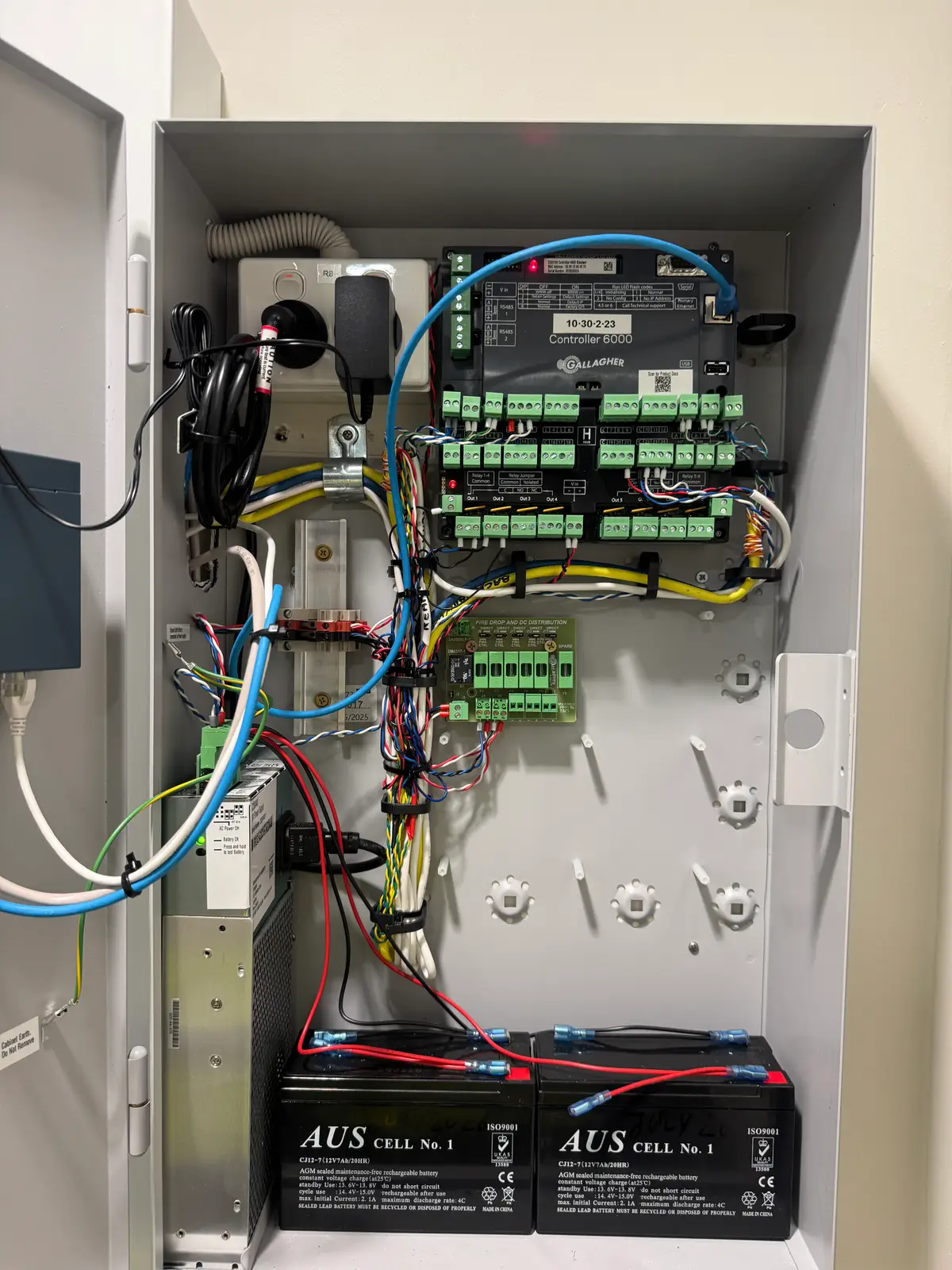
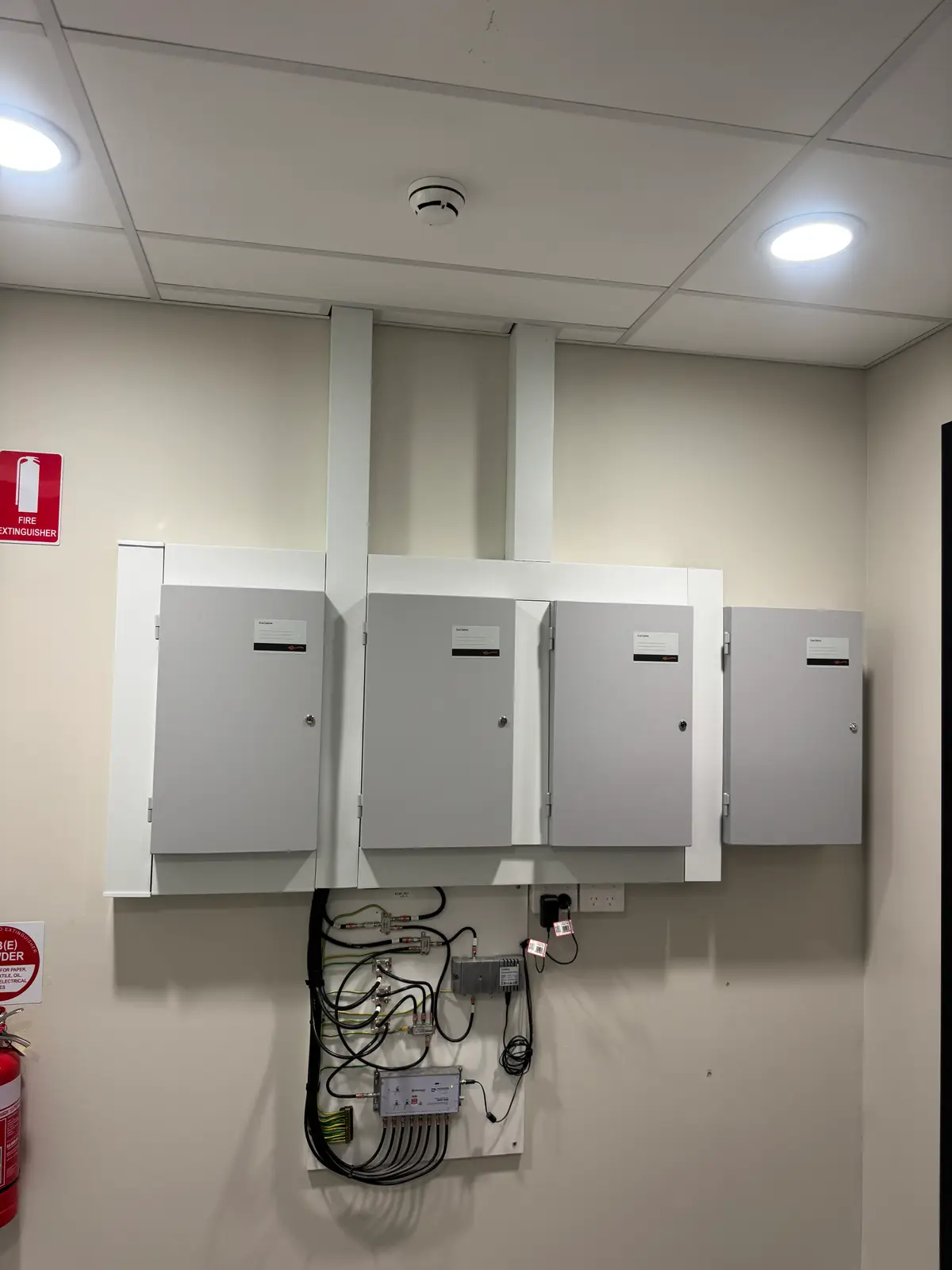
When a business moves its monitoring to us, the first job is not paperwork, it is the cabinet on the plant-room wall. On a recent commercial site the visit meant opening each controller enclosure, checking the backup battery and terminals, confirming which communicator was fitted and which network it was on, and pulling the zone list so the monitoring centre's programming matched what was actually wired. A panel that has been monitored for ten years often has zones labelled for a tenancy layout that no longer exists.
Then the path gets tested end to end: every zone tripped, the duress button pressed under test conditions, mains pulled to confirm the fail signal arrives, and the contact list read back to the client line by line. Two of the calls we took this year were from clients whose monitoring had quietly stopped working, one because the contact details at the centre were wrong, one because nobody at their provider answered when the alarm went off. Both are contact-list and path problems, and both are found on the first visit, not the first break-in.
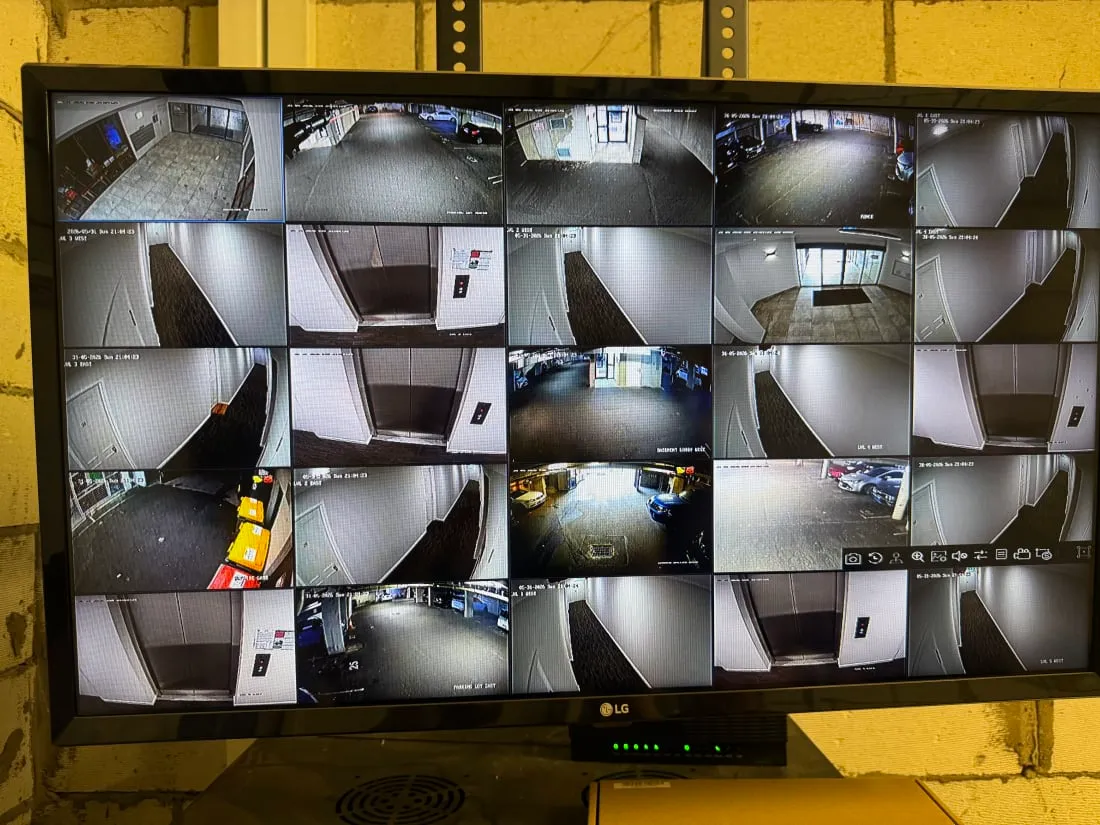
Where the site also has cameras, the same visit checks the recorder and the camera wall so verification is available to the operator from day one, and we document what was found so the client has a baseline for the maintenance agreement if they take one.
Retail groups, facility management companies, strata portfolios and businesses with premises in more than one state have a different problem from a single shop: keeping twenty contact lists, twenty arming schedules and twenty panels straight, with one bill and one report at the end of the month.
We set each site up as its own client code under one account. Each has its own keyholders, its own open/close schedule and its own response instructions, so a late-to-close at one store calls that store’s manager, not head office. Reporting rolls up by site, by region or across the portfolio. Adding a site is a programming change. Mixed panels across the estate are normal: we monitor Bosch at one site, Inner Range at another and Ajax at a third under the same account.
Where a facility manager or committee holds the relationship rather than the occupant, the reporting is written for them: what happened, who attended, what was found and what needs fixing, in a form that can be forwarded to an owner or an insurer without editing.
Accredited freight and bonded-store obligations: access, cameras and 24/7 monitoring in one system.
Open/close reporting per store, counter duress and portfolio reporting.
Reception duress, after-hours arming codes and cleaner schedules.
Dispensary duress, drug-safe zones and staff pendants reporting silently.
Monitoring and servicing across depots, libraries, halls and front counters under one contract.
Common-area alarms and plant rooms monitored for the committee or manager.
Multiple buildings on one account with term-time schedules and camera verification.
Plant rooms, stores and yards with shift-based arming and perimeter events.
Compounds and laydown areas reporting over 4G where there is no fixed network.
Bosch Solution series, Hills, Ness, DSC and Tecom panels re-pointed to our centre, with communicator upgrades where the site is still on 3G.
Inner Range Inception and Integriti, and Gallagher, where the alarm, access control and duress inputs report from one controller.
Ajax hubs with dual-path reporting, wireless pendants and outdoor detection, suited to tenancies where cabling is not an option.
Existing NVRs where supported, plus UniFi Protect, Hikvision, Dahua and Ajax cameras linked to alarm zones for operator verification.
The signals are the same, the response plan is not. A business account carries a per-site contact list with roles rather than family members, open and close reporting so a late-to-close or early-open event is flagged, duress and hold-up signals handled silently, and reporting that a facility manager or committee can actually read. Multi-site operators get every site under one account with its own keyholders. A residential plan does none of that.
In most cases, yes. Bosch, Hills, Ness, DSC, Tecom, Inner Range and Ajax panels can usually be re-pointed to our Grade A1 monitoring centre. The first visit confirms the panel can be programmed, checks the communicator and backup battery, and tests the signal path end to end before the account goes live. Any notice period or exit terms with your current provider sit in your agreement with them, so check those before you set a changeover date.
No. Monitoring and servicing are separate agreements. Several of our commercial clients came to us for one and added the other later. If you keep your existing monitoring and only want servicing, or the reverse, that works. Most multi-site clients do end up combining them under a commercial maintenance agreement because one contractor knowing every panel is simpler, but it is not a condition.
A duress activation is a silent event. Nothing sounds on site. The monitoring centre receives it as a priority signal, follows the agreed procedure for that site, which normally means police notification and a call to nominated contacts rather than a call back to the counter where the button was pressed, and logs the event. Fixed under-counter buttons, two-button reception units and wireless pendants all report the same way.
Yes. Each site is a separate client code with its own contact list, arming schedule and response instructions, grouped under one account for billing and reporting. Adding a site later is a programming change, not a new agreement. This is the usual arrangement for retail groups, facility managers, strata portfolios and businesses with premises in more than one state.
A monitored commercial alarm should report over two paths, typically the site network and a 4G communicator, so the loss of one does not take the site off the air. The monitoring centre also watches for the absence of signals: a panel that stops polling generates a communications-fail event for the operator to act on. Sites still reporting over a 3G-only communicator need that unit replaced, as the 3G networks in WA have been switched off.
It depends on the number of sites, whether duress and open/close reporting are required, whether camera verification is included, and the communicator fitted to each panel. Takeover of an existing panel is priced differently from a new install. Send us the site list and what is currently installed and we will quote the monitoring, and separately the servicing if you want it.
Tell us how many sites, what panels are on the wall, who monitors them now and whether duress or open/close reporting is required. We will come back with a monitoring quote and, if you want it, a separate servicing quote.