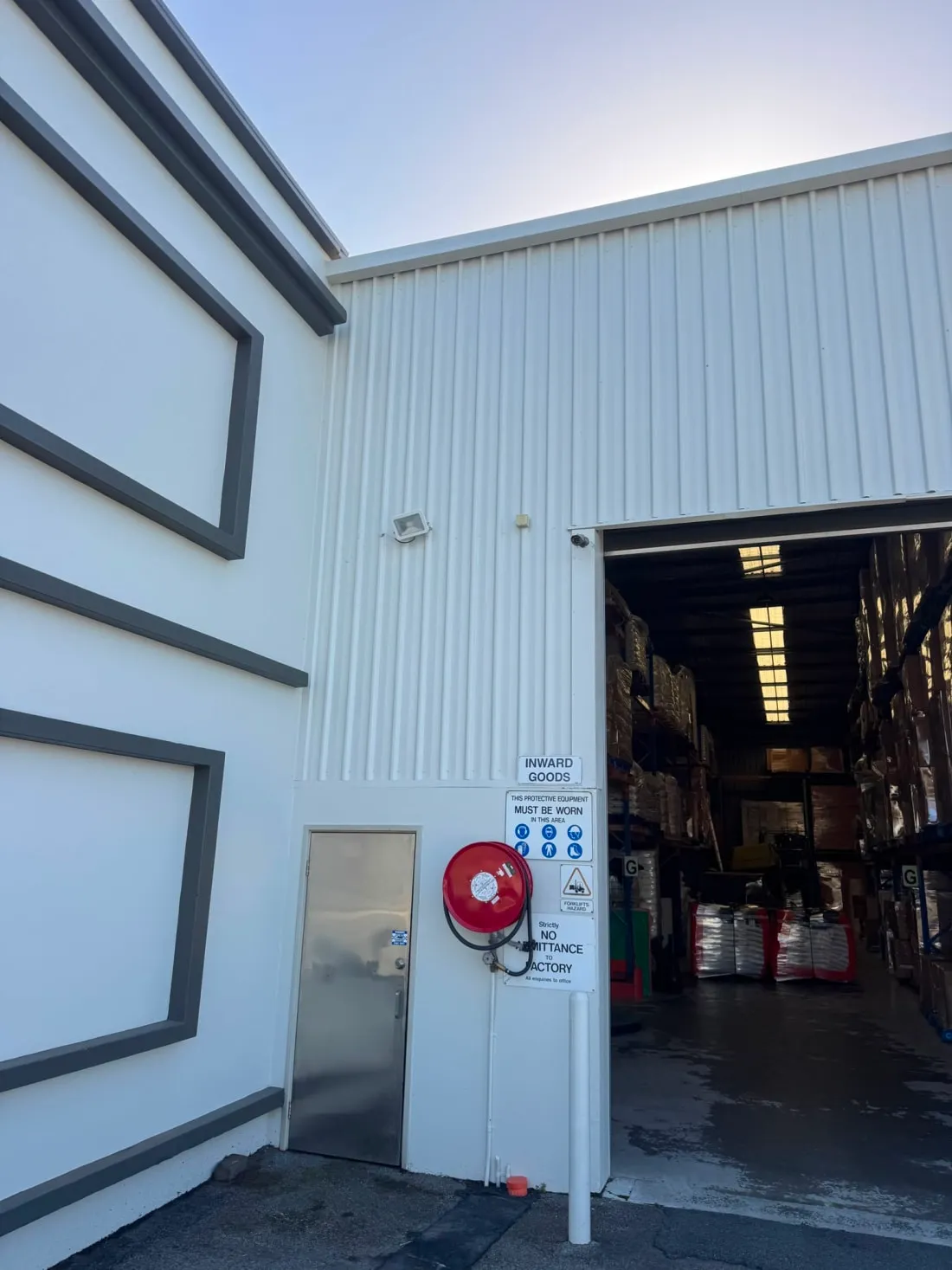
Protect your warehouse, inventory, and assets with comprehensive security solutions designed for industrial facilities. From perimeter protection to inventory monitoring, we secure Perth's warehouses and distribution centres 24/7.
Industrial facilities face unique security risks that require specialized solutions beyond standard commercial security systems.
Warehouses are prime targets when unoccupied. Thieves target high-value inventory, equipment, and copper wiring during nights and weekends.
Internal theft and stock shrinkage cost Australian warehouses millions annually. CCTV monitoring helps identify and prevent inventory loss.
Large facilities with multiple entry points need controlled access management to track who enters restricted areas and when.
Busy loading areas with constant truck traffic create blind spots and opportunities for theft during deliveries and pickups.
Forklifts, pallet jacks, power tools and warehouse equipment are valuable targets. GPS tracking and CCTV provide protection and recovery options.
Large outdoor storage areas and perimeters require surveillance coverage and alarm detection to prevent unauthorized entry.
Multi-layered security designed specifically for industrial and warehouse environments across Perth.
Complete Surveillance Coverage
Restrict & Monitor Entry
24/7 Intrusion Detection
Outdoor Security Solutions
Professional installation with minimal disruption to your warehouse operations.
We visit your warehouse to identify vulnerabilities, high-risk areas, and coverage requirements for optimal protection.
Tailored security plan with camera placements, access points, alarm zones, and integration with existing systems.
Licensed technicians install all equipment with structured cabling, avoiding disruption to warehouse workflows and operations.
Comprehensive staff training on system operation, plus ongoing technical support and maintenance packages.
Specialized security solutions for different warehouse and industrial facilities across Western Australia.
High-volume logistics facilities with multiple loading docks, inventory zones, and 24/7 operations requiring comprehensive coverage.
Production facilities storing raw materials, work-in-progress inventory, and finished goods requiring equipment and asset protection.
Transport hubs handling high-value goods, parcels, and freight requiring tracking, surveillance, and access management.
Refrigerated warehouses for food, wine, pharmaceuticals requiring temperature-rated cameras and environmental monitoring.
Facilities storing construction equipment, tools, and machinery requiring theft prevention and asset tracking systems.
Document storage facilities requiring strict access control, audit trails, and compliance with privacy regulations.
Construction supply yards with outdoor storage requiring perimeter protection, lighting, and equipment tracking.
Automotive parts storage with high-value inventory requiring inventory monitoring and theft prevention systems.
Controlled drug storage facilities requiring compliance-grade security, access logs, and regulatory documentation.
A warehouse security design starts at the boundary and yard, not the building. Fence-line beams or AI camera analytics detect movement in the yard before anyone touches a roller door, and motion-activated lighting removes the darkness intruders rely on. At the gate, ANPR (number plate recognition) cameras create an automatic register of every truck and vehicle movement — a genuine operational tool for freight disputes ("the carrier says the truck left at 4:10pm") as well as a security record. Facilities running transport fleets should also see our transport and logistics security page for depot and gate workflows.
The loading dock is the highest-loss zone in most facilities, because goods sit staged, doors stand open and third-party drivers walk through daily. Coverage here means a camera per door capturing faces and pallet movements, plus wider views of the staging area so every pallet's journey from racking to truck is on record. Inside, cameras run along racking aisles with attention to pick faces holding high-value SKUs, and a caged or access-controlled high-value store holds the stock that walks: electronics, tools, copper, pharmaceuticals. Card readers on the cage and store entries — part of a proper commercial access control system — turn "someone took it" into "this credential opened that door at 6:42pm". Platforms like Inner Range Inception suit single warehouses well, combining access and intrusion in one controller with a clean mobile app.
After hours, the building hands over to a monitored commercial alarm: reed switches on personnel doors and roller doors, long-range PIRs down the aisles, and detection in the office where laptops and cash live. The alarm matters because cameras alone only record a burglary — a monitored system gets it actioned. The camera layer itself is standard commercial CCTV installation work: PoE cameras on structured cabling, an NVR sized for your retention period, and remote access for managers. Facilities with production areas attached can extend the same head-end across the plant — see our manufacturing security page.
Warehouse operators carry a WHS duty of care that security systems directly support. Forklift and pedestrian interactions, dock edge incidents, and lone workers on early or late shifts are all scenarios where recorded footage settles what actually happened — protecting workers and the business alike during an incident investigation. Access control adds the compliance layer: contractor inductions tied to credentials, restricted areas (chemical stores, plant rooms, racking maintenance zones) physically limited to authorised staff, and an audit trail for every entry.
Insurers ask the same questions after every burglary: was there a monitored alarm, was it armed, and is there footage? Commercial property and stock-in-trade policies routinely expect intrusion detection on industrial premises, and documented security measures support both premium negotiations and the claim itself. Internal shrinkage deserves equal attention — stock adjustments and "damaged in transit" write-offs are where warehouse losses hide, and the fix is the combination of dock cameras, exception reporting and a culture of visible accountability described in our guide to workplace theft prevention. Because discrepancies often surface at stocktake weeks later, retention should run 30–90 days; our CCTV footage retention guide covers how to size storage and stay compliant.
Get a warehouse security assessment and custom quote. Professional installation with minimal disruption to your operations.