Designed around the dispensary

Pharmacy Security Systems Perth

Pharmacy security systems Perth pharmacies ask us for fall into four parts: an alarm with the dispensary and safe area on its own zone, cameras that show the counter, the scripts bench and the shop floor, access control on the dispensary door so only the pharmacist and nominated staff go through it, and a duress button where the pharmacist stands. We design, install and maintain all four for new pharmacy fit-outs and for existing chemists replacing older systems, and we replace EAS gates that have stopped working.

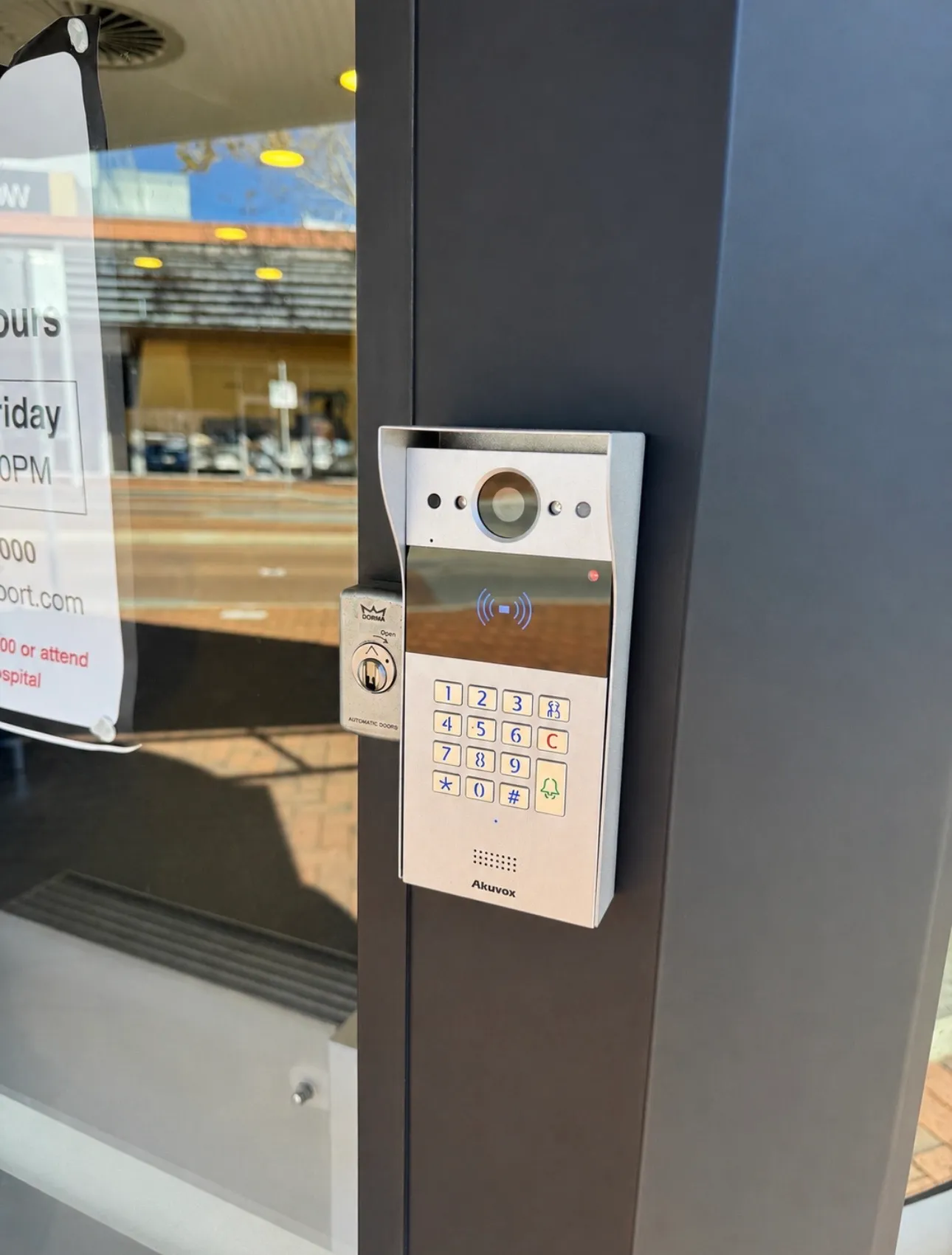
Pharmacy security systems Perth: keypad and intercom reader at the entry door of a medical premises

Alarm zones that match how a pharmacy is laid out

A pharmacy is two buildings in one: a retail floor that trades like any shop, and a dispensary with scheduled medicines that has to be locked, alarmed and recorded separately. We zone the alarm so the dispensary, the safe room and the back door report individually to the monitoring centre, with the shop floor on its own zone. That way a sensor in the dispensary after hours is identified as what it is rather than a general alarm, and the monitoring centre's contact list and response instructions can differ by zone. Vibration or seismic detection on the safe is added where the pharmacist stores Schedule 8 medicines, with the detector type chosen for the safe and wall it is fixed to.

Your pharmacist already knows the storage rules that apply under WA's Medicines and Poisons Regulations 2016; our part is designing the alarm and access around the rooms those rules apply to. Monitoring is through our commercial alarm monitoring accounts, with open and close reporting so a late opening or an early arming is visible to the owner.

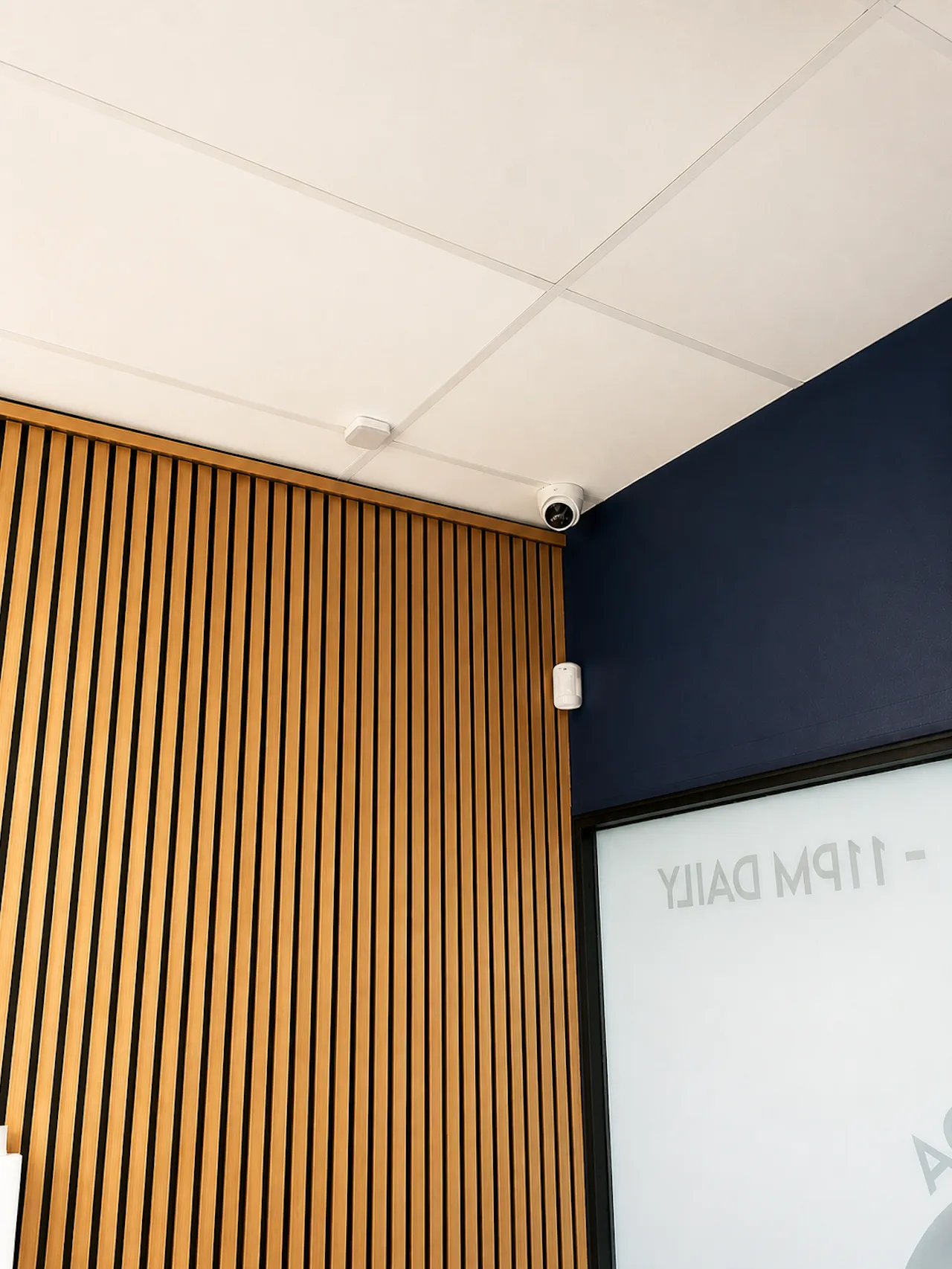
Dome camera and motion detector above the entry of a shop with trading hours on the glass door

Cameras over the counter, the scripts bench and the floor

Pharmacy camera layouts put the first camera over the dispensing counter so the customer, the pharmacist and what passes between them are in one frame, with a second camera on the scripts bench and the dispensary interior. The shop floor is covered from the entry inward, with face-height identification at the door and an overview of the aisles that carry the lines pharmacies lose most: cosmetics, vitamins, baby formula and over-the-counter medicines. A camera at the rear door and one at the safe complete the set. Where the pharmacy sits inside a medical centre or shopping centre, we coordinate with the centre's own cameras rather than duplicating them.

  • Dispensing counter: hands, bench and customer in frame, with point-of-sale text overlay as an option where the recorder and POS system support it.
  • Dispensary and safe: interior camera on the scripts bench and the safe door, recorded continuously.
  • Entry and floor: identification at the door, overview cameras on the aisles, a camera on the EAS gate line.
  • Rear door and receiving: deliveries of stock and medicines are a recorded area, not a blind spot.

Recording is sized for the retention the owner wants; thirty days is the common starting point and our footage retention guide explains the usual periods. Camera placement follows the Surveillance Devices Act 1998, so consulting rooms and staff areas stay uncovered and entry signage is quoted with the install.

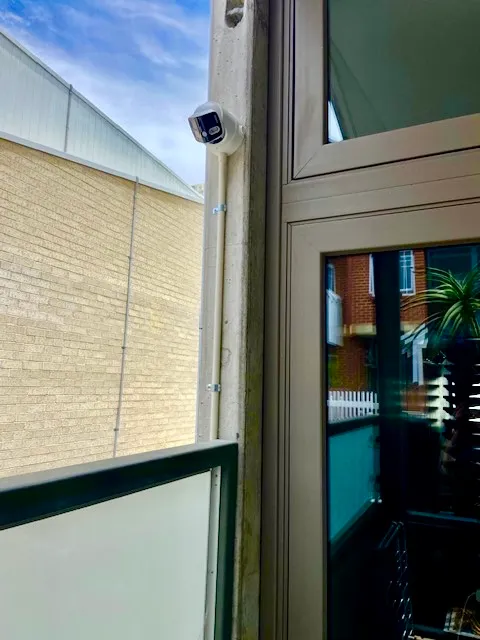
Compact camera mounted outside a glass entry door covering the approach

Access control on the dispensary door

The dispensary door is the door that matters. A keypad or card reader on it means only the pharmacist and nominated staff can enter, the door locks behind them, and the system records who opened it and when. Pharmacies inside medical centres often add the dispensary door to the centre's existing access control system, which is work we do regularly: a new controlled door built to match the doors already on the system, cabled back to the existing controller or a new one where capacity has run out. Standalone pharmacies usually start with the dispensary door and the rear staff entry on key fob access control, with the front door on a timer so it unlocks for trading hours and locks at close.

Staff turnover is handled by cancelling a fob rather than changing a code everyone knows. Where the owner runs more than one pharmacy, credentials can be managed across all of them from one login; our security systems for retail groups page covers multi-site set-ups.

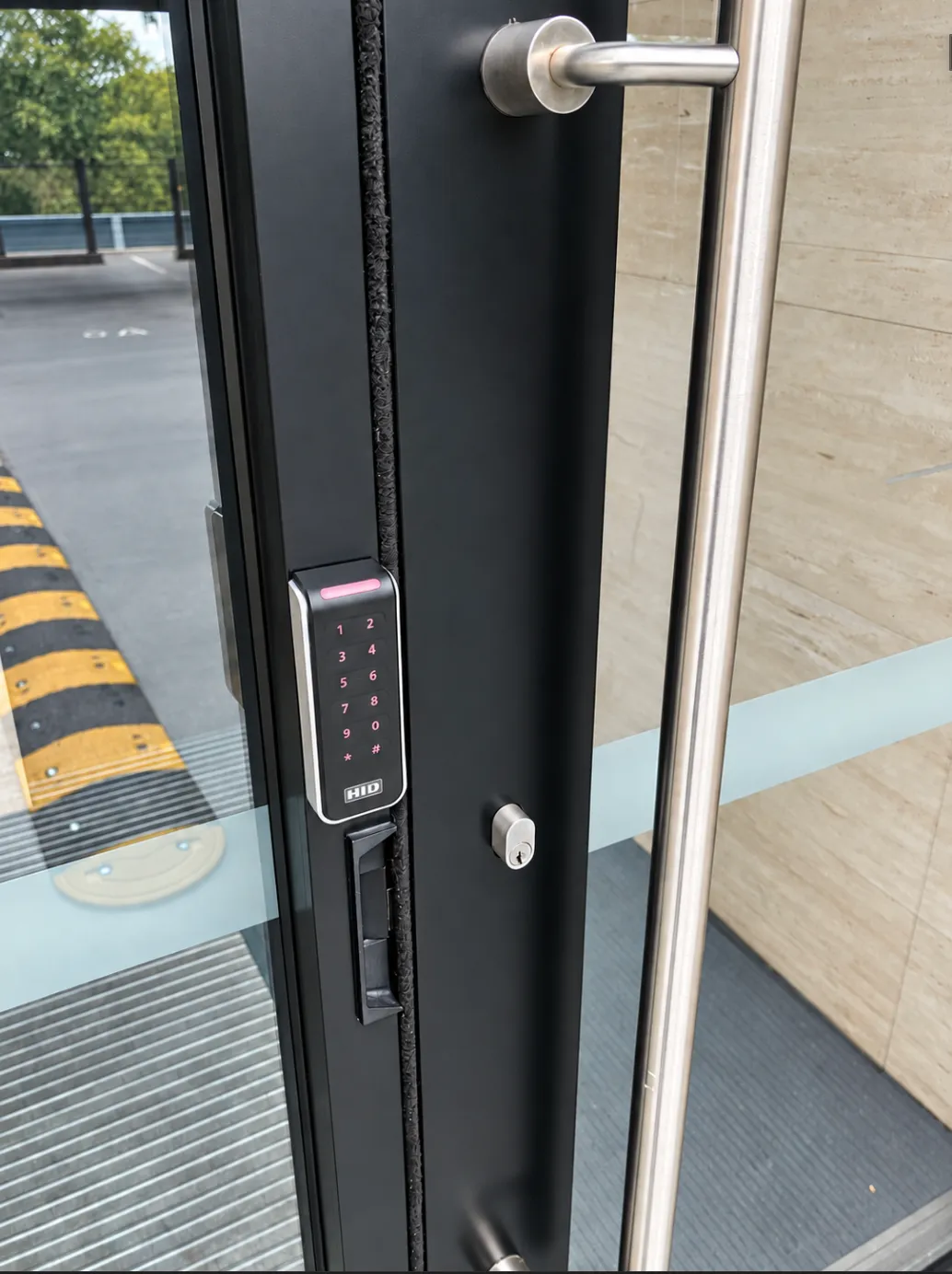
Keypad reader on the glass entry door of a commercial premises with the car park beyond

Duress at the counter and EAS at the door

Pharmacists work at a counter where scheduled medicines are the thing being asked for, and a fixed or wireless duress button under that counter is the standard answer. Pressed, it sends a silent signal to the monitoring centre, which follows the pharmacy's response instructions without alerting the person at the counter. Wireless pendants suit pharmacists who move between the dispensary and the floor. Our silent duress alarm page explains the options and how the monitoring centre handles the signal.

At the door, EAS pedestals and the deactivator at the counter protect the retail lines that walk out most. Pharmacies tend to run acousto-magnetic (AM) systems because the tags work on foil packaging and small items; we install new systems and replace gates that have stopped working, which is a common first call we take from established chemists. Our EAS systems page covers the tag and pedestal options.

New fit-outs and existing pharmacies

New pharmacy fit-outs come to us through the owner or the shopfitter, usually with a build window of a few weeks and a date the pharmacy has to be trading by. We work from the shopfitter's plan to place cameras, readers and detectors before the ceilings close, run cabling with the other trades and commission once the counters and the safe are in. Where the fit-out reuses an older tenancy with existing cabling or a previous control box, we test what is there and rewire where the time to trace old cabling would cost more than new runs.

Existing pharmacies usually call about one part of the system: an alarm panel on a 3G path that no longer reports, a recorder that cannot identify anyone at the counter, a dispensary door that is still on a mechanical key, or EAS gates that have failed. We quote the part that is wrong and make sure what we add works with what stays. After the install, login details and an app walk-through are part of handover, and the system can be placed on a commercial maintenance agreement if the owner wants scheduled checks. Our pharmacy security industry page covers the losses pharmacies see most and the Dahua retail options; this page is about the systems themselves.
Questions we get asked

What security system does a pharmacy in Perth need?

A monitored alarm with the dispensary and safe on their own zones, cameras covering the dispensing counter, scripts bench, shop floor and rear door, access control on the dispensary door, and a duress button at the counter. EAS gates are added where retail lines justify them. Each part is scoped to the pharmacy layout, so a chemist inside a medical centre and a standalone pharmacy end up with different designs.

Can you put the dispensary door on our medical centre access control system?

Yes. Adding a controlled door to an existing system is routine work: reader, lock hardware and door contact matched to the doors already on the system, cabled to the existing controller or a new one where capacity has run out. We confirm the system brand and controller capacity on a site visit before quoting.

Do you install duress buttons for pharmacists?

Yes. Fixed buttons under the dispensing counter and wireless pendants for pharmacists who move around are both common. The button sends a silent signal to the monitoring centre, which follows the response instructions the pharmacy sets. Duress is tested with the monitoring centre at handover.

Can you replace our broken EAS gates?

Yes. Replacing failed pedestals, deactivators or the whole EAS system is a regular call from established pharmacies. We confirm which tag technology the pharmacy runs, usually acousto-magnetic, and match the replacement so existing tags and labels keep working where possible.

Can you fit the security during a new pharmacy fit-out?

Yes. We work from the shopfitter plan to place cameras, detectors and readers before ceilings close, cable alongside the other trades and commission once the counters and safe are in place. The earlier we have the plan, the fewer surprises at the end of the build.

What do pharmacy security systems cost?

The main variables are the number of cameras and controlled doors, whether the alarm is new or a takeover of an existing panel, monitoring, duress devices, EAS pedestals and whether the work is part of a fit-out or a retrofit around trading hours. Send photos or the fit-out plan and we will quote from the actual layout.

Send us the plan or the photos

A fit-out plan, or photos of the counter, dispensary door, safe and rear entry, plus whether an alarm or EAS system exists today. We will come back with a quote for each part of the system, or arrange a visit around trading hours if the layout needs one.