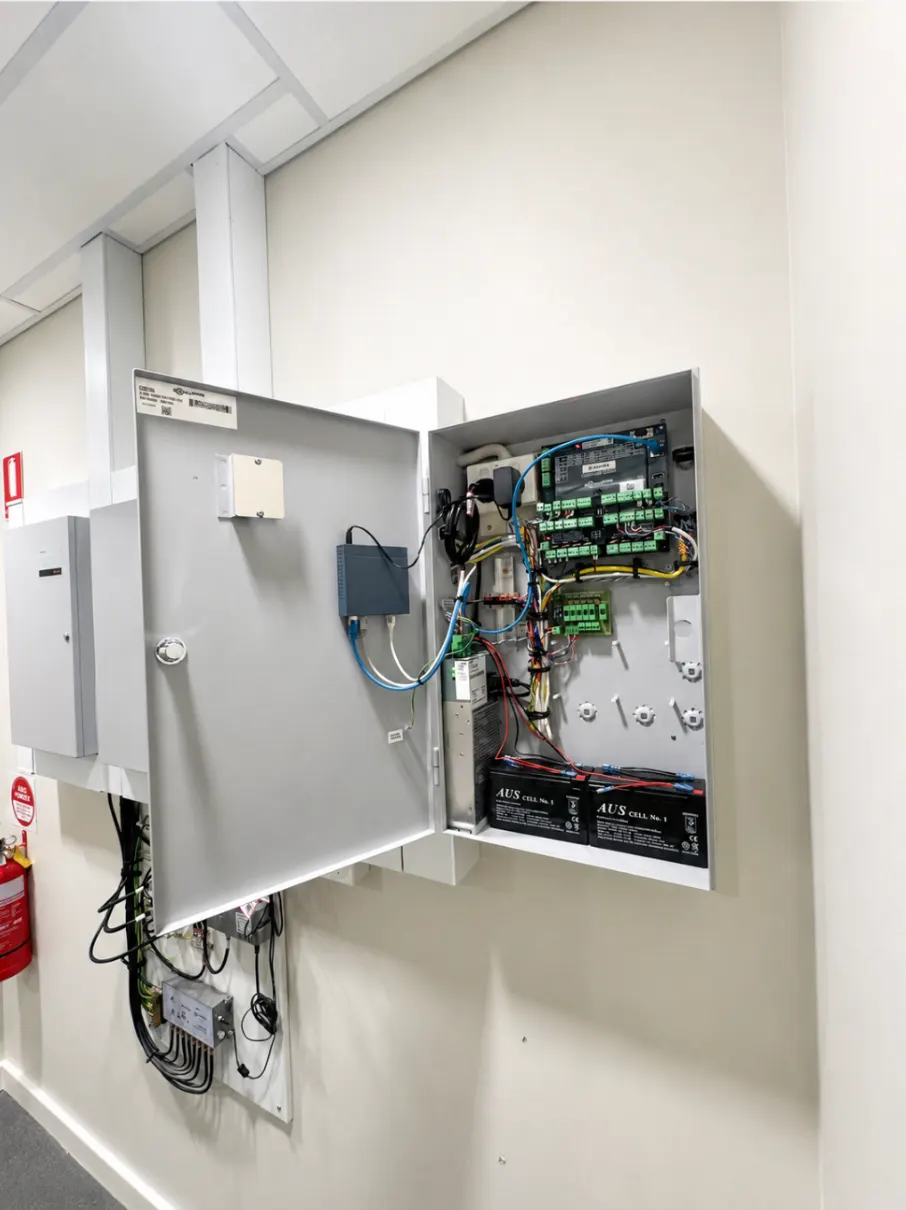
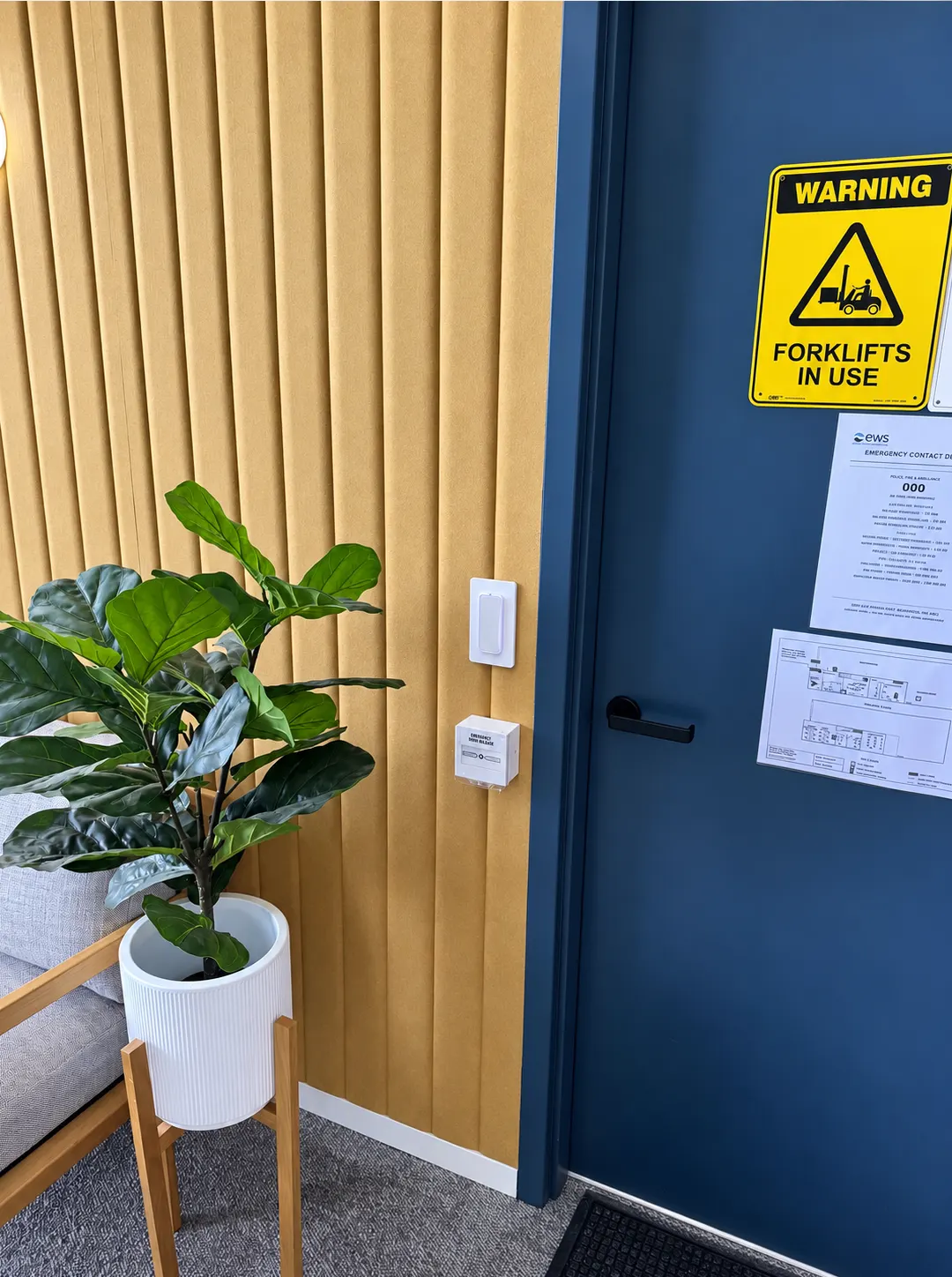
Time and attendance access control Perth employers use to turn the door swipe staff already do into a clock-in record: who arrived, when, through which door, and when they left. We install the readers, controllers and reporting so the same credential that opens the door produces an attendance log, for workshops, warehouses, clinics, labour-hire sites and offices across the Perth metro area.
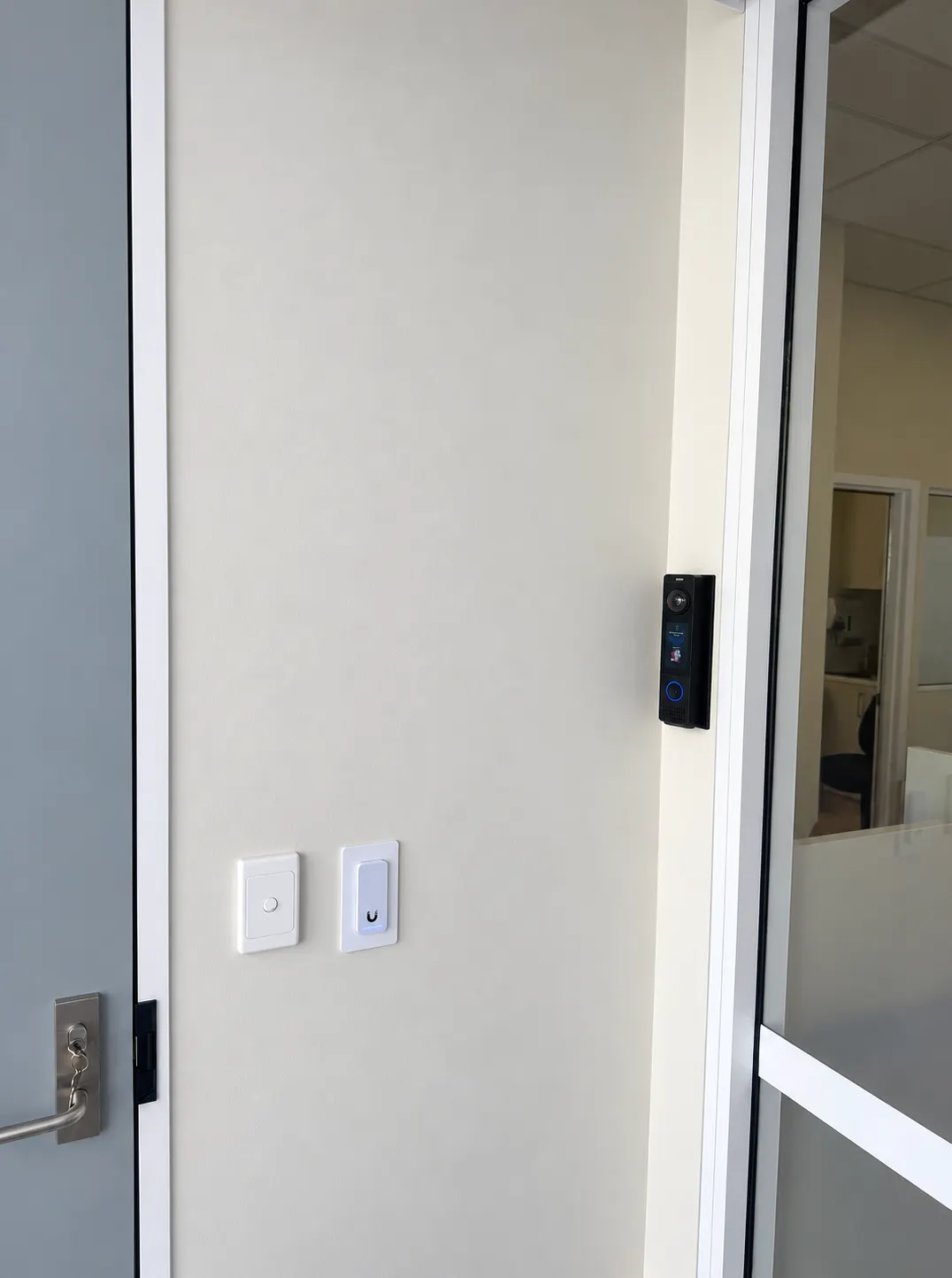
Every access control system already logs who presented a credential at which reader and when. Turning that into attendance is a design decision rather than a different product: a reader on both sides of the staff entry so there is an in event and an out event, a rule that stops a card being used to enter twice without leaving, and reports grouped by person and shift rather than by door.
The output is a plain spreadsheet or a scheduled report: first in, last out, total hours and breaks per person per day. Your payroll team or bookkeeper reconciles it against the roster in whatever rostering or payroll software you run. We are careful with the wording here because it matters: this is an attendance record produced by the door system, not a payroll product, and we scope the export around what your payroll process actually needs.
If you already run one of these, the attendance side is usually a matter of adding exit readers and configuring reports rather than replacing anything. See the Gallagher and Inner Range pages for the platforms themselves.
The same records answer a second question that matters on industrial and health sites: who is inside the building at this moment. Contractor credentials are issued with an expiry date and only activate once the induction is signed off, visitors are badged at reception and show in the same list, and the system can produce a roll call of everyone on site when the alarm goes or the fire warden asks. For a workshop with apprentices, a warehouse running shifts or a mine-support yard with subcontractors coming and going, that list is worth as much as the hours report.
Workshops and fabrication yards where the bundy clock is still on the wall; warehouses and transport depots with shift changes and casual labour; clinics and allied health groups that want one attendance record across three sites; professional offices where flexible hours have made the paper sign-in sheet meaningless. In each case the staff already carry a fob or card for the door, so the attendance record costs them nothing extra to produce, which is why it gets used.
Attendance is one of several integrations we design around access control. The access control Perth page covers the others, from gym membership software to visitor management and lifts.
Door logs are records of entry to the workplace, and most staff accept them readily once it is explained that the same record protects them in a dispute about hours. Larger employers covered by the Privacy Act need the collection covered in their privacy policy, and any business should tell staff plainly what is recorded and who can see it. We design the system so the data stays on your controller or your account, and we can advise on what is technically possible, but the policy itself is yours and your advisers' to set.
Yes for most sites. A reader on each side of the staff entry produces in and out events per person, the system reports first in, last out and hours per shift, and the export goes to whoever runs payroll. The advantage over a bundy clock is that staff already carry the credential for the door, and a card cannot clock in for someone who is not there if anti-passback and CCTV on the entry are in place.
Sometimes directly, usually by export. Gallagher supports dedicated time-and-attendance software that reads its transactions and produces payroll-ready files; Inner Range and UniFi Access expose event logs and an API that a developer can connect to another system. For most Perth businesses a scheduled spreadsheet export reconciled against the roster is the practical answer, and we confirm what your software can accept before quoting.
For hours reporting, yes, which is why we fit a reader on the exit side of the staff entry rather than relying on an exit button. Anti-passback rules can require an out event before the next in event, which also stops a card being passed back through the door. Fire-rated and egress doors keep their free exit regardless, so the rule applies to the credential, never to the door.
It makes it visible and easy to prove rather than impossible. Each person has one credential, anti-passback stops a card being used twice without an exit, and a camera on the entry tied to the door event shows who actually presented the card. Where that is not enough, a fingerprint or face reader on the staff entry ties the clock-in to the person rather than the card.
That person has no in event, so their hours will not reconcile and the gap shows up in the report, which is usually enough to fix the habit. Door monitoring also reports a door held open beyond a set time. For sites that need every entry recorded, a turnstile or an interlocked entry enforces one credential per person.
It depends on how many entries need an in and out reader, whether an access control system already exists, which platform suits the reporting you need, and whether a dedicated time-and-attendance software module is required or a scheduled export is enough. Tell us the number of staff entries and what your payroll process needs to receive, and we will quote from there.
How many doors staff come and go through, whether an access control system is already installed, and what your payroll process needs to receive at the end of the fortnight. We will design the readers, the rules and the export around that.