Cam-Map WA: Should You Register Your CCTV With WA Police?
What the register actually shares, what it doesn't, and whether it's worth putting your cameras on it — straight answers from installers who get asked constantly.
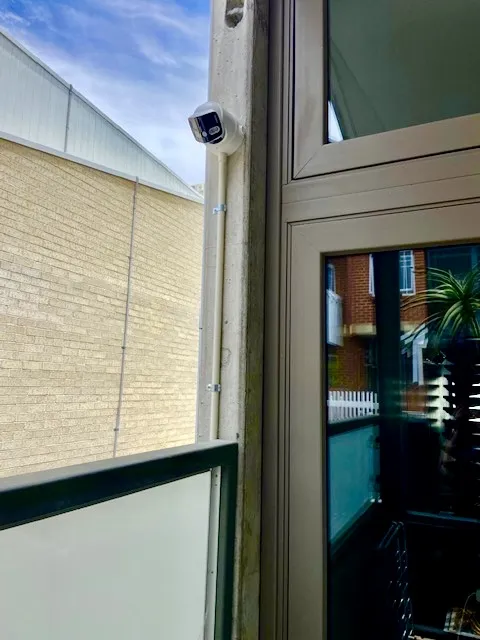
Cam-Map WA is the WA Police Force's voluntary register of privately owned CCTV systems. You tell police where your cameras are; if a crime happens nearby, they know who to ask for footage. That's the whole idea — and yet it generates more questions from our customers than almost anything else we install: Can police watch my cameras? Do I have to hand over footage? Is there any actual benefit to me?
What Cam-Map WA Actually Is
Cam-Map WA is a secure database, operated by WA Police, of voluntarily registered CCTV systems across the state — homes, businesses, local governments and schools. Registration is aimed at public-facing cameras: systems with at least one camera covering a street, footpath, park, laneway or other public area.
When police investigate an incident — a burglary spree, a hit-and-run, a missing person — they can search the register for cameras near the scene and contact the owners to ask whether footage exists. That's the mechanism. It replaces the old approach of officers door-knocking a street hoping to spot camera domes.
What It Is Not
This is where most of the worry lives, so let's be precise:
- Police do not get access to your cameras. Registration records the location and details of your system — it doesn't connect your NVR to anything. There is no live feed, no remote login, no back door.
- Registration is voluntary. You choose to sign up, and you can have your details removed.
- Handing over footage remains your decision in the normal course. Police contact you and ask. (As with anything, they can seek a warrant or order in serious matters — but that's true whether or not you ever registered.)
- It's not a public map of your cameras. The database is held by WA Police; it's not a public directory burglars can browse.
What You Provide When You Register
For a residential registration: your full name as it appears on your driver's licence, your residential address, contact details, and some details about the system — how many cameras, what they cover, roughly what quality. It takes a few minutes on the official Cam-Map WA portal, and the WA Government's Cam-Map WA service page explains the process.
Keep your details current — if you move or rip the system out, update or remove the registration, or police end up chasing footage that doesn't exist.
The Case for Registering
- It makes your cameras useful beyond your own fence line. The car break-in three doors down gets solved because your driveway camera caught the vehicle passing. Most serious volume-crime investigations are stitched together from exactly this kind of footage.
- It speeds up the ask. Police reach you while the footage still exists, instead of three weeks later when your NVR has overwritten it. (Typical home recorders keep days to a few weeks — see our guide on exporting footage for police.)
- Some councils attach money to it. The City of Kwinana has offered a $50 rebate just for registering an existing CCTV system on Cam-Map WA. The City of Gosnells goes further — its CCTV rebate requires Cam-Map registration and at least one camera covering a publicly accessible area. Details for every council scheme are in our Perth council CCTV rebates guide — and always confirm current terms with the council before relying on them.
- It's the neighbourly infrastructure play. A suburb with twenty registered systems is a genuinely harder place to offend in than one with none. You'd want your neighbour's camera registered the night your car gets done.
The Reasonable Hesitations
- You're sharing your name and address with a police database. For most people that's a non-issue; for some it matters. It's a fair personal call either way — the scheme being voluntary is the point.
- You might be asked for footage at inconvenient times. In practice requests are rare and you can decline in the normal course.
- Your cameras need to be worth registering. A blurry 2012-era analogue camera that can't produce a usable face or plate mostly generates disappointment. If your footage wouldn't help you, it won't help police — that's a camera-quality conversation before it's a registration one.
One thing registration does not change: your obligations under WA surveillance law. What you may point cameras at, and the rules around audio, are the same registered or not — covered in our WA security camera laws guide.
Our Take
For the typical Perth home or small business with a modern system and a street-facing camera: register. The privacy cost is small and well-defined, the community benefit is real, and in some council areas there's literally money attached. If you're uneasy about being on a database, don't — the system protects your own property identically either way.
When we install a new system with public-facing coverage, we'll set cameras up so at least one captures the approach/street cleanly (within the law), which is what makes both the rebate schemes and the register worthwhile.
FAQs
Can WA Police watch my cameras live if I register with Cam-Map WA?
No. Cam-Map records your system's location and details only — nothing connects to your recorder. If footage might help an investigation, police contact you and ask.
Is registering my CCTV with Cam-Map WA compulsory?
No, it's entirely voluntary, and you can ask for your registration to be removed.
Do I get paid for registering?
The City of Kwinana has offered residents a $50 rebate for registering an existing system, and Gosnells requires registration as a condition of its CCTV rebate. Other councils don't currently attach money to registration — check your council's current terms, and see our council rebates guide for what applies in your suburb.
Do I have to give police my footage if they ask?
A request through Cam-Map is just that — a request, which you can decline in the normal course. Formal legal avenues (warrants, orders) exist for serious matters regardless of whether you ever registered.
What kind of cameras are worth registering?
Anything modern that covers public space — street, verge, footpath, laneway — at a quality that could identify a person or vehicle. If your system is older analogue gear that can't, an upgrade is worth more to you than a registration.
Does registering change what I'm legally allowed to film?
No. The Surveillance Devices Act 1998 (WA) applies the same either way — registration is a directory entry, not a permission.
Want Cameras Worth Registering?
Sharp enough for plates and faces, positioned right, retention set properly — we design CCTV systems that would actually help if it ever mattered.